The Midweek #88: An Open Letter to Texas Gov.-elect Gina Hinojosa: Please Abandon Plans to Send $1,500 Checks to Texas Households
Dear Gov.-elect Hinojosa:
Congratulations on your stunning victory over longtime Gov. Greg Abbott in the Nov. 3 midterm election. Many of us who identify as independents and cross party lines to vote for candidates rather than political parties were deeply gratified to see Abbott and Lt. Gov. Dan Patrick, among other Republican statewide officeholders, swept out of office.
A half-century as a journalist has shown me, again and again, that Lord Acton, the British historian and political observer, was right in 1887 when he famously wrote, “Power tends to corrupt, and absolute power corrupts absolutely.”
The last straw for me with Abbott came in August when he visited San Antonio and publicly branded CPS Energy, San Antonio’s municipally owned energy utility, “a monopoly,” in an ill-conceived and clumsy attempt to open the local market to for-profit electricity retailers. The move threatened affordability in the market and the stability of the city of San Antonio’s general fund, which relies on the utility’s annual contributions for 30% of its revenue.
The last straw for me with Patrick came in October 2025 when the former radio talk show host and extremist culture warrior engineered the ouster of Alamo Trust CEO Kate Rogers, whose doctoral dissertation offended Patrick and other Republican officeholders after they discovered she had written that politicians should not dictate what teachers teach in the classroom.
Texas had reached an inflection point where simply stating the truth could lead to one’s professional demise.
While I congratulate you, Gov.-elect Hinojosa, I hope you will abandon your campaign promise, first made in Houston this past summer, to give 11.6 million Texas households a $1,500 “corruption tax refund” by drawing down the state’s Economic Stabilization Fund, popularly known as the Rainy Day Fund.
Math has always been this journalist’s weak spot, but when I multiply $1,500 times 11.6 million, I get $17.4 billion. That would reduce the Rainy Day Fund, estimated to total $27.4 billion at year’s end, to $10 billion. That would and should set off alarms.
Some recipients would use the check to pay down credit card debt. Many more would probably go shopping. Millions of Texas households, including mine, would receive money they do not need.
The payments would, in effect, be no different from Abbott and Patrick’s billion-dollar education voucher giveaway to families.To date, more than 80% of the 111,000 recipient families had children already enrolled in private school, homeschooled or too young for school, while 44,000 households receiving vouchers averaging $7,500 to $8,000 were not among the lowest-income families, according to the Texas Comptroller’s October data, as reported by the Texas Tribune.
The promise, not unlike President Trump’s pre-election pledge to give every American adult $5,000 if Republicans kept control of Congress, makes for easy headlines but represents a terrible policy initiative. Such campaign promises made to lure voters are their own form of public corruption.
Beyond my concern that Democratic officeholders will follow Republicans with their own mistakes, I oppose such cash distributions on economic terms. While many Democratic voters who helped lift Hinojosa to her improbable victory undoubtedly could use a $1,500 windfall, the economic impact on the state and individual lives would be short-lived. It would be seen, correctly, as a missed opportunity to invest in the state’s most pressing needs: public school funding, Medicaid expansion, mass transit projects, and energy and water conservation, all of which would yield tangible returns on investment.
Hundreds of public school districts in the state are struggling with budget deficits, unfunded mandates from the Republican-led Legislature, and a teacher shortage that has led to the hiring of more than 44,000 uncertified teachers to fill post-pandemic vacancies. Weary taxpayers living in the state’s five biggest metro areas voted down 22 of 24 school bond proposals in the recent election. All three local districts with bond projects on the ballot were met with rejection.
Texas had its big blue day earlier this month, one I celebrated with the state’s majority of voters as we returned to two-party rule after three decades of single-party rule. That’s an important point, Gov.-elect Hinojosa. Texas is once again purple, not red and not blue. You will have to work with a Democratic-controlled House and a Republican-controlled Senate.
Members of both parties might support a sugar-high policy of cash handouts disguised as tax refunds. That doesn’t make such largesse good policy. Look instead to longer-term investments that prove Democrats can fortify the highest-performing state economy in the nation.
Republicans were wrong to hoard dollars in the Rainy Day Fund and deny cities much-needed investment. Let’s responsibly draw down the fund in the next legislative session in meaningful ways that win bipartisan support and still leave Texas with the country’s soundest balance sheet.
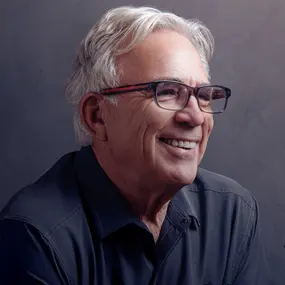
Host, bigcitysmalltown
Robert “Bob” Rivard is a veteran American journalist whose 46-year career has taken him across Texas, Latin America, and beyond. He co-founded the Rivard Report (later named the San Antonio Report) with his wife, Monika Maeckle, in 2012, building it into the city’s leading nonprofit news organization before retiring in 2022.
Bob has worked for five Texas newspapers, beginning his career on the border at the Brownsville Herald, then moving to the Corpus Christi Caller, the Dallas Times-Herald, and later serving as a foreign correspondent and chief of correspondents for Newsweek. He returned to Texas as senior editor of the San Antonio Light before becoming executive editor of the San Antonio Express-News (1997–2011).
His journalism has earned widespread recognition, including being named Editor & Publisher’s “Editor of the Year” in 2000 and receiving the prestigious Maria Moors Cabot Award from Columbia University for his reporting on Latin America and the U.S.-Mexico border.
He is the author of Trail of Feathers, a nonfiction book chronicling the disappearance and murder of journalist Philip True in Mexico’s Sierra Madre. The book, published by Public Affairs in 2005, was widely reviewed, excerpted in Esquire, and selected by People magazine as one of five recommended nonfiction works that year.
Bob now hosts bigcitysmalltown, a podcast featuring the people shaping San Antonio’s future. He and Monika live in Southtown, where she runs the Texas Butterfly Ranch blog and previously founded the annual San Antonio Monarch Butterfly and Pol… Read More


