The Midweek #71: Fireworks – Public Entertainment at the Expense of Public Health and Cruelty to Animals
I can’t think of a faster way to alienate readers than to renew my annual call for an elimination of public fireworks displays, and my parallel call for city police here and in the suburbs to vigorously enforce existing prohibitions on individuals setting off private fireworks. Some day, public opinion will turn in defense of public health and safety, not to mention the devastating effect of fireworks on pets and urban wildlife.
Fireworks have been part of the Independence Day and New Year’s Eve celebrations in U.S. cities for a long time. Tradition matters, but the future matters more. We now know what we didn’t know in the past, and in this case, we know fireworks are hazardous to your and my health. Like cigarettes, fireworks might seem cool, but they do serious harm. That’s not debatable. So, elected leaders and the public can ignore the facts, or they can face them.
One way to effect change is for corporate and civic sponsors to take the lead and announce they will no longer underwrite events that are not in the public interest. In this instance, USAA and Centro San Antonio sponsored and organized this year’s Stars & Stripes Downtown Spectacular, the first Independence Day fireworks display launched from Civic Park at Hemisfair. Perhaps next year they can sponsor a laser display and spare us the noise, the smoke, and the toxic air.
The negative effects of public fireworks displays on humans are significant and measurable. Fireworks are more than dazzling eruptions of color and light. They fill the atmosphere with toxic metallic particles and clouds of smoke, rapidly converting the air we breathe into a hazard. Our air quality is measurably worse with each passing year, and the increase in asthma and other respiratory problems has risen accordingly.
Some in the city have criticized my writings on this topic in past years, noting that eventually air quality levels return to their pre-festival readings once the fireworks haze clears. True, but that does not mitigate the damage done.
We have long passed the time to debate the negative impacts on people and animals, both pet dogs as well as bats, birds, and other wildlife. Our family’s rescue dogs are terrified by fireworks and remain frightened, panting and shaking for hours after the explosions subside. There is plenty of data available demonstrating fireworks’ negative impact. Enough data, in fact, that city officials and their sponsors have to knowingly turn a blind eye to the negative impacts in favor of giving the public what they want.
Giving the public what it wants is a poor way to govern. Plenty of people would light up a cigarette at the restaurant table next to you or in the workplace if they could. Others wish it weren’t against the law to drink and drive, or to drive at whatever speed they wish.
This year’s 250th national anniversary celebrations in Washington, D.C., and Nashville – to note the nationally televised displays – were far more extravagant and much longer than what those cities experienced in past years. A Code Red alert was issued by Washington, D.C. officials on Sunday, the day after the fireworks extravaganza there. Surely the readings were just as bad in Nashville. Both cities resembled war zones as skylines disappeared and enormous clouds of smoke and debris blanketed the urban cores.
The Environmental Protection Agency in its highly reduced state of regulatory oversight failed to issue any press release on its weekend air quality readings, but hazardous to very unhealthy ratings were registered in Washington, DC., Los Angeles, Nashville, Detroit, Phoenix, and, in all likelihood, in San Antonio, although the local readings were available when I checked on Monday.
Over Independence Day weekend, we loaded up our dogs and drove to West Texas to escape the noise, but even in the Big Bend gateway town of Marathon with less than 300 people, locals chipped in for a half-hour fireworks show. Afterward, people firing off their personal purchases of rockets and firecrackers kept the dogs panting and seeking safety for hours.
The San Antonio Report published an article on July 1 noting the decision by senior city staff and City Council to conduct the first review of the city’s 2019 Climate Action and Adaptation Plan, which called for the city to become carbon neutral by 2050. I’ve seen very little movement since then to enact the plan. City officials point to “progress,” but no tough, significant decisions have been made.
Carbon neutrality by 2050 is now seen here and just about everywhere else as an unsustainable goal, but as the article notes, even with the Trump administration officials and other climate change deniers controlling federal and state agencies, there are still steps local officials could take to reduce carbon emissions.
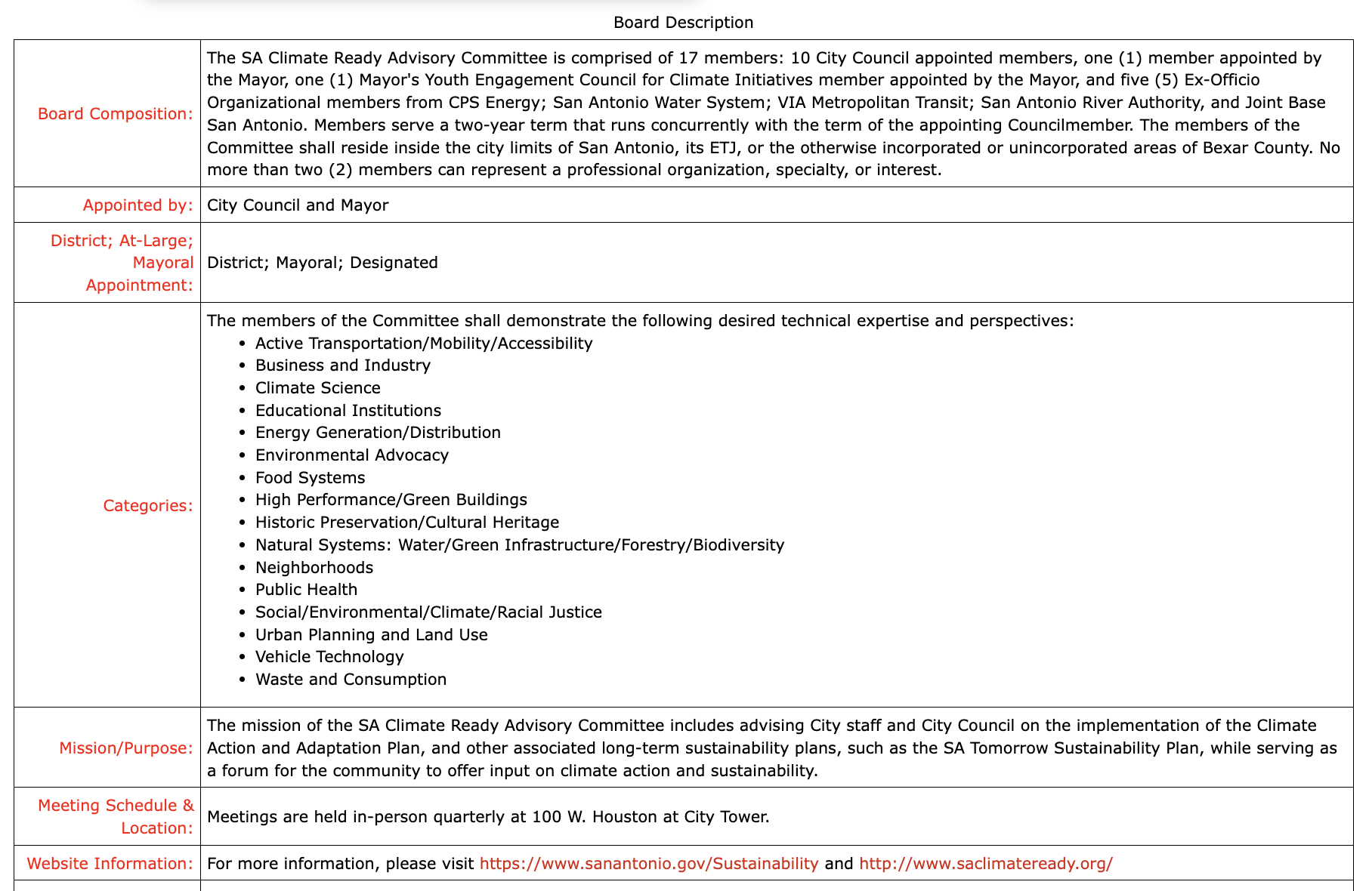
I expect The SA Climate Action Committee to acknowledge the lack of progress implementing the 2019 plan, which lacked measurable milestones. Will a revised plan call for concrete steps and timelines? It remains to be seen whether Mayor Gina Jones and City Council support the committee proposing real change going forward. Surveys consistently show the American public favors addressing climate change by cutting carbon emissions, but people are generally unwilling to park their gas-powered vehicles, alter their thermostat settings, or make other changes requiring personal sacrifice.
Elected officials will have to choose between acting in the long-term interests of citizens and political expediency. If they choose the former, they should be prepared for the difficult consequences that follow. If they choose to stay the course, they will be failing future generations. I suggest the committee hold public hearings and invite public health officials and animal rights advocates to address members.
Any science-based analysis will lead to an inevitable conclusion: It’s time to create new traditions, at least two days out of 365.

Host, bigcitysmalltown
Robert “Bob” Rivard is a veteran American journalist whose 46-year career has taken him across Texas, Latin America, and beyond. He co-founded the Rivard Report (later named the San Antonio Report) with his wife, Monika Maeckle, in 2012, building it into the city’s leading nonprofit news organization before retiring in 2022.
Bob has worked for five Texas newspapers, beginning his career on the border at the Brownsville Herald, then moving to the Corpus Christi Caller, the Dallas Times-Herald, and later serving as a foreign correspondent and chief of correspondents for Newsweek. He returned to Texas as senior editor of the San Antonio Light before becoming executive editor of the San Antonio Express-News (1997–2011).
His journalism has earned widespread recognition, including being named Editor & Publisher’s “Editor of the Year” in 2000 and receiving the prestigious Maria Moors Cabot Award from Columbia University for his reporting on Latin America and the U.S.-Mexico border.
He is the author of Trail of Feathers, a nonfiction book chronicling the disappearance and murder of journalist Philip True in Mexico’s Sierra Madre. The book, published by Public Affairs in 2005, was widely reviewed, excerpted in Esquire, and selected by People magazine as one of five recommended nonfiction works that year.
Bob now hosts bigcitysmalltown, a podcast featuring the people shaping San Antonio’s future. He and Monika live in Southtown, where she runs the Texas Butterfly Ranch blog and previously founded the annual San Antonio Monarch Butterfly and Pol… Read More