The Midweek #70: Will Our Republic Celebrate Its 500th Anniversary?
This week, The Midweek honors our nation’s birth 250 years ago on July 4, 1776, with the publication of an essay by the Honorable Fred Biery, U.S. District Judge in the Western District and the longest serving federal judge in San Antonio.
Judge Biery is a San Antonio native who previously practiced law here, served as a county court and state district court judge, was elected to serve on the Fourth Court of Appeals, and in 1994 was appointed to the federal bench by President Bill Clinton.
Biery has received national attention for his whimsical legal opinions that often are sprinkled with literary and cultural references, witticism, and the occasional pun. Click on articles by the New York Times, Wall Street Journal, and the Washington Post to read more about Judge Biery and his opinions.
Today, we publish Judge Biery’s essay on the future of our “imperfect union,” while on Friday, we will release the latest episode of bigcitysmalltown featuring our conversation.
Happy Fourth of July! It has nothing to do with fireworks.
_ _ _
Will Our Republic Celebrate Its 500th Anniversary?
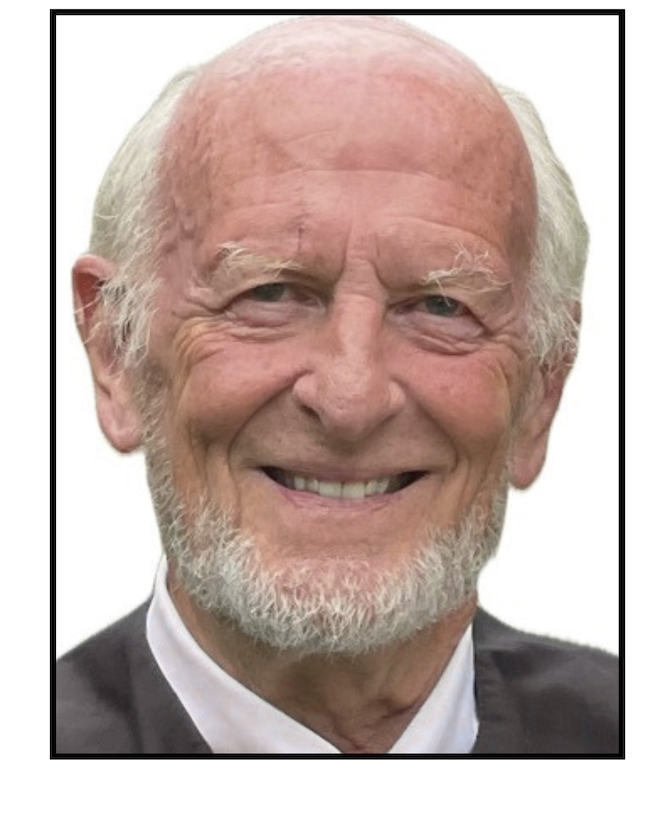
By the Honorable Fred Biery, United States District Judge
With our French and Spanish allies, the assistance of some First American tribal people seeking to protect their territories and African-American patriots hoping for their freedom, plus the luck of a fog in Brooklyn helping General Washington to early victories, the patriots prevailed against overwhelming odds.
Our national birth story had its philosophical gestational roots with the enlightenment writings of John Locke, Jean-Jacques Rousseau and others, which persuaded and led the founders to the radical idea of a democratic republic being the preferred form of government and that “all men are created equal” and to revolt against the concept of the divine right of kings, primogeniture, and taxes, tariffs and fees imposed without representation.
Those rights fought for by the patriots did not provide the right to vote for white males without property until some years after their service in the Revolutionary War. One of them was my fourth great-grandfather, Walter Waller Brown, who, as far as we know, owned no property.
And, of course, it took 130 years for the female descendants of Martha Washington, Abigail Adams, Dolley Madison, and the women of the Revolution who sacrificed dearly to be allowed the same voting rights as their husbands. Texas women and human beings with names like Vargas and Rodriguez of either gender were not allowed to serve on juries until the 1950s. Hernandez v. Texas, 347 U.S. 475 (1954). See Passage of Proposition 6, Texas Constitution (1954). Hence, truer words were never written, "to form a more perfect union," because we are an imperfect species. But over the course of 250 years, we have evolved through the ups and downs of history to make those words on parchment be more inclusive. May we continue to aspire for more perfection and concur with historian David McCullough: "I am a short-term pessimist and a long-term optimist."
Sir John Glubb grew up in an English military family and was a military officer, fought, was wounded, and was decorated in World War I and served many years in administrative posts in the Middle East. One of his 17 books entitled The Fate of Empires and Search for Survival is a cautionary tale in which he postulates that great nations and empires follow a predictable 250-year lifecycle through stages: The Age of Pioneers and then the Ages of Conquests, Commerce, Affluence, Intellect and Decadence, ultimately collapsing due to the internal moral decay of selfishness, materialism and loss of duty rather than just external forces, with the final “Decadence” marked by pessimism, frivolity, and societal apathy. He urges us to learn from history and not fall prey to the same devolution.
Great Britain, the Italy of Rome, France, Spain, and Portugal still exist but without the wealth, power, and influence they once had before their decline. The difference between the withering of great nations and the United States is the power of the first word in the Constitution: “We.” The “We” who can recognize our shortcomings as opposed to the self-interest of a monarch or an authoritarian. The “We” who can use our collective power and will to search for that more perfect union. To do so, hear the prescient and now timely words of Washington, Jefferson and Franklin, speaking to us from the 18th century, if only we will listen.
President Washington, in his farewell address, warned of partisanship as the primary problem for the American republic: "It serves always to distract the public councils and enfeeble the public administration. It agitates the community with ill-founded jealousies and false alarms, kindles the animosity of one part against another, foments occasional riot and insurrection and can open the door to foreign influence and corruption. They can also become potent engines by which cunning, ambitious and unprincipled men will be enabled to subvert the power of the people and to usurp for themselves the reins of government, destroying afterwards the very engines which have lifted them to unjust dominion.”
President Washington also warned against foreign entanglements bogging us down for years of lost blood and treasure. Vietnam and Afghanistan come to mind. Article I, Section 8, of the Constitution says: The Congress has the power of the “We,” not the “I,” to declare war and invade other countries with military assets. It can be argued that the Constitution prevails over the Monroe Doctrine. To think otherwise gives aid and comfort to President Putin, President Xi, and others of their ilk to do likewise with obeisance of present-day Neville Chamberlains. If it looks like a war, walks like a war and quacks like a war, it probably is a war and not a duck.
Thomas Jefferson's declaration of grievances against a would-be king over this continent include these: "A history of repeated injuries and usurpations, all having in direct object the establishment of an absolute tyranny over these states….He has obstructed the administration of justice by refusing his assent to laws for establishing judiciary powers. He has made judges dependent on his will alone for the tenure of their offices and the amount and payment of their salaries." Today, there are hundreds of Department of Justice Executive Branch immigration judges, United States Attorneys, FBI agents, scientists, and doctors who have lost, either by firing or resigning in dissent and as a matter of conscience, the tenure of their offices for trying to abide by their oath to the Constitution and not submitting to the will of their employers. And now, a retired Navy Captain, combat pilot, and astronaut is being called a traitor and threatened with death by the President of the United States and reduction in rank by the Secretary of Defense because he exercised his First Amendment right as a citizen and as a United States Senator. Perhaps the Constitution controls over the Uniform Code of Military Justice. See Kelly v. Hegseth, 26-cv-00081-RJL, in the United States District Court for the District of Columbia.
The signers of the Declaration had these objections to a king as well:
“Obstructing the laws for naturalization of foreigners.” (Apparently the founders knew there was a need for immigrants.)
"He has kept among us, in times of peace, standing armies without the consent of our legislatures." (Our Supreme Court recently allowed an Order which precludes troops in Chicago to remain in place pending appeal.) Trump v. Illinois 146 S.Ct. 432 (2025).
"For quartering large bodies of armed troops among us."
"For cutting off our trade with all parts of the world."
"For imposing taxes on us without our consent." (Farmers, ranchers, businesspeople, consumers, and economists might say tariffs imposed by executive order are taxes without representation.) The Supreme Court addressed the issue in Learning Resources, Inc. v. Trump 146 S.Ct. 628 (2026). (The International Emergency Economic Powers Act does not authorize the President to impose tariffs.)
"For transporting us beyond seas to be tried for offenses."
"For depriving us of the benefits of trial by jury." And, I would add, without due process and the rule of law. See Arias v. Noem, 26-cv-415-FB in the United States District Court for the Western District of Texas (Jan. 31, 2026).
To rebel against those injustices, the founders pledged their lives, their fortunes, and their sacred honor. Democracy is messy. It is inconvenient and burdensome to govern ourselves, but much better than allowing a king or authoritarian to do it for us. Those who sacrificed ask only that we do our part to preserve what they gave us. Those who gave their lives so we could would wonder why they did if we don’t.
In the last 60 years, examples come to mind of two men who tried to tear our constitutional fabric, but courageous Americans followed the examples of our patriot ancestors and exercised their rights under the First Amendment. On March 9, 1954, our parents and grandparents heard Edward R. Murrow speak truth to demagogic power: “The Senator’s [Joseph McCarthy] primary achievement has been in confusing the public mind, as between internal and external threats. We must not confuse dissent with disloyalty. We must remember always that accusation is not proof and that conviction depends on evidence and due process of law. We will not walk in fear, one of another. We will not be driven by fear into an age of unreason, if we dig deep in our history and our doctrine and remember that we are not descended from fearful men, not from men who feared to write, to speak, to associate and to defend causes that were, for the moment, unpopular. There is no way for a citizen of a republic to abdicate his responsibilities. The Senator did not create this situation of fear. He merely exploited it. Cassius was right, ‘The fault, dear Brutus, is not in our stars but in ourselves.’”
Mr. Murrow quoted from Julius Caesar. Mr. Shakespeare also wrote these prophetic words in Henry VI: Jack Cade said, “And when I am king, as king I will be, and the good people will worship me their lord.” Then his right hand sycophant, Dick the Butcher said, “The first thing we do, let’s kill all the lawyers,” who were the guardians and protectors of English rights and to do so for would-be king Cade to achieve his illegitimate seizure and usurpation of power.
Our Great Seal includes the motto “E pluribus unum,” which translates to “out of many, one;” a principle, which, in our current divisiveness, is in short supply. A victim of the political violence of his day, Mr. Lincoln would implore us to seek another new birth of freedom with malice towards none and to invoke the better angels of our nature against the coarseness of our culture, instead of yielding to our basest instincts.
On July 24, 1974, Texas lawyer Barbara Jordan observed that the Constitution did not apply to her and her ancestors when it was written, but because of civil war, elections and litigation, it finally enabled her as a member of Congress to say these words against a corrupt President who, among other things, was using the Internal Revenue Service and other powers of government against his perceived political enemies. Her words echoed through the halls of the Capitol, “My faith in the Constitution is whole; it is complete; it is total. I am not going to sit here and be an idle spectator to the diminution, subversion, destruction of the Constitution.” May those ideas still resonate today.
Fifty-five years ago, at Fort Dix, New Jersey, I first took an oath to the Constitution written with a feather by flawed and hypocritical men, living in and with the realities of their time, as are we all. Before it was written, two men whose names are little remembered, John Pulling and Robert Newman, in their own small way helped to begin a new nation by hanging lanterns, one if by land and two if by sea. That experiment in democracy can continue with us if we also do our small part. Since 1971, I’ve taken that oath seven more times, as a Texas and United States lawyer and for five judicial offices. I take it again: I solemnly affirm that I will support and defend the Constitution of the United States against all enemies, foreign and domestic; that I will bear true faith and allegiance to the same. I take this obligation freely, without any mental reservation or purpose of evasion. I will seek justice without fear or favor. I will do justice for the poor as well as the rich, and that I will well and faithfully discharge the duties of the office on which I am about to enter.”
To those who disagree with our judicial rulings as we attempt to abide by that oath: We will not be intimidated. Threaten and assassinate us if you must, but please leave our loved ones alone.
On celebratory occasions in England a toast is given: "Huzzah! To the King, long live the King."
May our toast be: "To the Constitution, long live the Constitution and the United States of America."
On September 17, 1787, a lady asked, "Well, Dr. Franklin, what do we have?" "A republic, if you can keep it."
Now it is our turn to do the keeping. Our children and grandchildren and those patriot ancestors are watching and waiting and wondering what we will do. Time will tell.
_ _ _
Fred Biery is closing in on five decades of active Texas and United States judicial service. And he loves (and looks) every minute of it. His court career actually began in the 1960s when his college basketball coach had him spend a lot of time “on the bench.” He has been published in Law360 regarding creative opinion writing, has been featured in the Wall Street Journal and the New York Times and quoted in the Washington Post, Texas Monthly and other publications. The Texas Bar Foundation named him Outstanding Jurist of Texas for 2024. His proudest achievements are two daughters who worked away from home for many years but are now called “Mommy.” And the apples of his eye are granddaughters Harlow, Gema, and Raya who call him “Yonor.”

Host, bigcitysmalltown
Robert “Bob” Rivard is a veteran American journalist whose 46-year career has taken him across Texas, Latin America, and beyond. He co-founded the Rivard Report (later named the San Antonio Report) with his wife, Monika Maeckle, in 2012, building it into the city’s leading nonprofit news organization before retiring in 2022.
Bob has worked for five Texas newspapers, beginning his career on the border at the Brownsville Herald, then moving to the Corpus Christi Caller, the Dallas Times-Herald, and later serving as a foreign correspondent and chief of correspondents for Newsweek. He returned to Texas as senior editor of the San Antonio Light before becoming executive editor of the San Antonio Express-News (1997–2011).
His journalism has earned widespread recognition, including being named Editor & Publisher’s “Editor of the Year” in 2000 and receiving the prestigious Maria Moors Cabot Award from Columbia University for his reporting on Latin America and the U.S.-Mexico border.
He is the author of Trail of Feathers, a nonfiction book chronicling the disappearance and murder of journalist Philip True in Mexico’s Sierra Madre. The book, published by Public Affairs in 2005, was widely reviewed, excerpted in Esquire, and selected by People magazine as one of five recommended nonfiction works that year.
Bob now hosts bigcitysmalltown, a podcast featuring the people shaping San Antonio’s future. He and Monika live in Southtown, where she runs the Texas Butterfly Ranch blog and previously founded the annual San Antonio Monarch Butterfly and Pol… Read More


