Monday Musings #46: The Austin-San Antonio Megaregion: Mega-Challenges and Mega-Opportunities
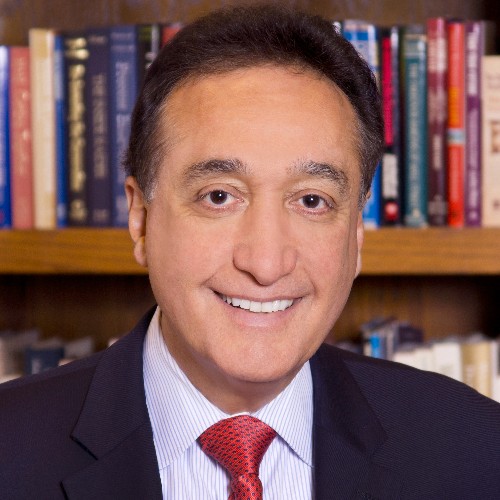
There is a reason I joined with former San Antonio Mayor and U.S. Secretary of Housing & Urban Development Henry Cisneros and former San Antonio Express-News business columnist David Hendricks to report and write The Austin-San Antonio Megaregion: Opportunity and Challenge in the Lone Star State (Texas A&M University Press, 2025).
While I am as worried as many of you are with the precarious state of geopolitics and the radical reordering and decline of American democracy, I also believe it is vitally important for all who call this Central Texas corridor home to focus on the perils and possibilities in one of the fastest-growing pockets of the American urban landscape. No state is wealthier or more flush with cash than Texas, yet very little is being done at the state level to address this unprecedented growth.
Public policy reading might not be your favorite pastime, but the book is intended as a clarion call to action for all of us to prepare smartly for our own future—or risk serious consequences. This past weekend reminded me that the challenges only grow more pressing, even as many in leadership positions talk only about the economic opportunities that come with record growth.
Along the traffic-choked Interstate 35 corridor connecting Austin and San Antonio, the city of Buda, with its quaint, well-dressed Main Street and 16,500 people, is one of the smallest of the fast-growing “corridor cities” that are transforming from ranching or agricultural outposts into big city bedroom suburbs.
Buda and many of the other area cities offer more affordable housing, a distinct sense of community and regional identity, and amenities once the exclusive province of big cities: younger professionals moving in to fill the inviting coffee shops, restaurants with ambitious chefs, smart, locally-owned shops and boutiques, and generally speaking, good public schools and low crime rates. Most importantly, these cities offer proximity to higher-paying jobs in the two big cities for people who either cannot afford or do not wish to navigate urban settings with 1 million or more people.
My wife, Monika Maeckle, and I drove to Buda on Saturday afternoon to attend the soft opening of a new restaurant being opened by family members. I won’t mention the name since this is not intended as a self-serving promotion. I do hope you find it.
I will draw your attention, as mine was drawn Saturday afternoon, to the southbound line of gridlocked traffic that stretched for miles to the north as vehicles approached the seemingly endless construction in and around I-35 and Loop 1604. It was the weekend, early afternoon, and most people were not working, yet the line of big trucks and cars inching forward stretched beyond the horizon. Welcome to I-35, seemingly all the time.
The Texas Department of Transportation—more appropriately regarded as the Department of Perpetual Highway Expansion—is spending $8.5 billion or more in highway expansion projects in Austin and San Antonio, most of it along the I-35 corridor. That does not count what it spends on maintenance or what cities will spend in concert with the highway expansion projects.
The state could have built a commuter train in the corridor connecting the two major metro areas had state elected leaders made mass transit a priority at the end of the last century and the early years of this one. Yet TxDOT remains a 20th-century transportation agency. Its 2026-2027 biennium budget will be about $40 billion, with all but $5 billion devoted to highway projects.
The multibillion-dollar I-35 and Loop 1604 project—miles-long, claustrophobic walls of concrete towering over the access road strip centers, mega-warehouses, fast-food franchises and box stores, will do little to relieve worsening congestion in the corridor. That’s not a prediction. It’s a conclusion drawn from just about every other major urban highway expansion project in Texas.
Critics will quibble with me about the totals, but as 2025 ended, Texas had $25 billion in its Rainy Day Fund and a Consolidated General Revenue Fund cash balance of an additional $41 billion. California, the only state bigger than Texas, has $14 billion in its savings account. Yet state elected officials are allocating no significant funds or seeking to work with regional and local leaders on any major mass transit projects or studies in the Austin-San Antonio corridor.
I won’t go into the same detail, but pick any challenge: water diversification projects; reducing bureaucratic red tape and modernizing outdated development codes to address the housing crisis; and responding to climate change, which is occurring so rapidly that its effects are plainly visible, from 80-degree days in December to receding reservoir levels.
I share Cisneros's view that the only sensible approach to such growth and its challenges is the creation of a regional entity with all stakeholders at the table: state and local officials, private-sector and major employer executives, nonprofit and community organizations, and the region’s universities, currently serving 300,000-plus students in and around the corridor. We need a well-funded staff of subject experts supported by a board of influential civic leaders who together set aside partisan politics to work on solutions and long-term planning.
Texas is so fortunate to enjoy the growth and prosperity that make it the envy of all other states. It’s why thousands of people are migrating to the state daily, and why so many corporate relocations and expansions, particularly those on the West Coast, are coming here or thinking seriously about such a move. The state’s relative affordability, our abundant natural resources and land, the absence of an income tax and a pro-business environment all combine to make Texas the number one destination for mobile Americans.
The U.S. Census Bureau is not given to sensational predictions. Its demographers do issue evidence-based assessments that tend, if anything, to understate the inevitabilities. The Austin-San Antonio corridor is on a path, demographers say, to becoming the country’s next megaregion. Our current combined population of 5.3 million people will grow over the next 25 years by three million more people, the equivalent of the city of Chicago being added to the region, as Cisneros likes to say.
Will we prepare smartly for such growth, or will we just stand by and watch as it happens, naively touting the lists that cite us, year after year, as among the very fastest growing metros? The jury is out. So while some might see this week’s newsletter as a promotion of our book, which it is, it really is intended as a wake-up call. After all, in the coming years, Monika and I would like to travel the 70 miles from our San Antonio home to Buda for lunch and back in the same day, without it being a trip we dread.
We are not alone. The bigcitysmalltown podcast producer and co-host Cory Ames interviewed Cisneros and me for December’s year-end episode. Last time I checked, 681,000 people had viewed the video on YouTube. People across the region can see what is happening, and they are concerned. Are our elected leaders listening and willing to act?

Host, bigcitysmalltown
Robert “Bob” Rivard is a veteran American journalist whose 46-year career has taken him across Texas, Latin America, and beyond. He co-founded the Rivard Report (later named the San Antonio Report) with his wife, Monika Maeckle, in 2012, building it into the city’s leading nonprofit news organization before retiring in 2022.
Bob has worked for five Texas newspapers, beginning his career on the border at the Brownsville Herald, then moving to the Corpus Christi Caller, the Dallas Times-Herald, and later serving as a foreign correspondent and chief of correspondents for Newsweek. He returned to Texas as senior editor of the San Antonio Light before becoming executive editor of the San Antonio Express-News (1997–2011).
His journalism has earned widespread recognition, including being named Editor & Publisher’s “Editor of the Year” in 2000 and receiving the prestigious Maria Moors Cabot Award from Columbia University for his reporting on Latin America and the U.S.-Mexico border.
He is the author of Trail of Feathers, a nonfiction book chronicling the disappearance and murder of journalist Philip True in Mexico’s Sierra Madre. The book, published by Public Affairs in 2005, was widely reviewed, excerpted in Esquire, and selected by People magazine as one of five recommended nonfiction works that year.
Bob now hosts bigcitysmalltown, a podcast featuring the people shaping San Antonio’s future. He and Monika live in Southtown, where she runs the Texas Butterfly Ranch blog and previously founded the annual San Antonio Monarch Butterfly and Pol…Read More