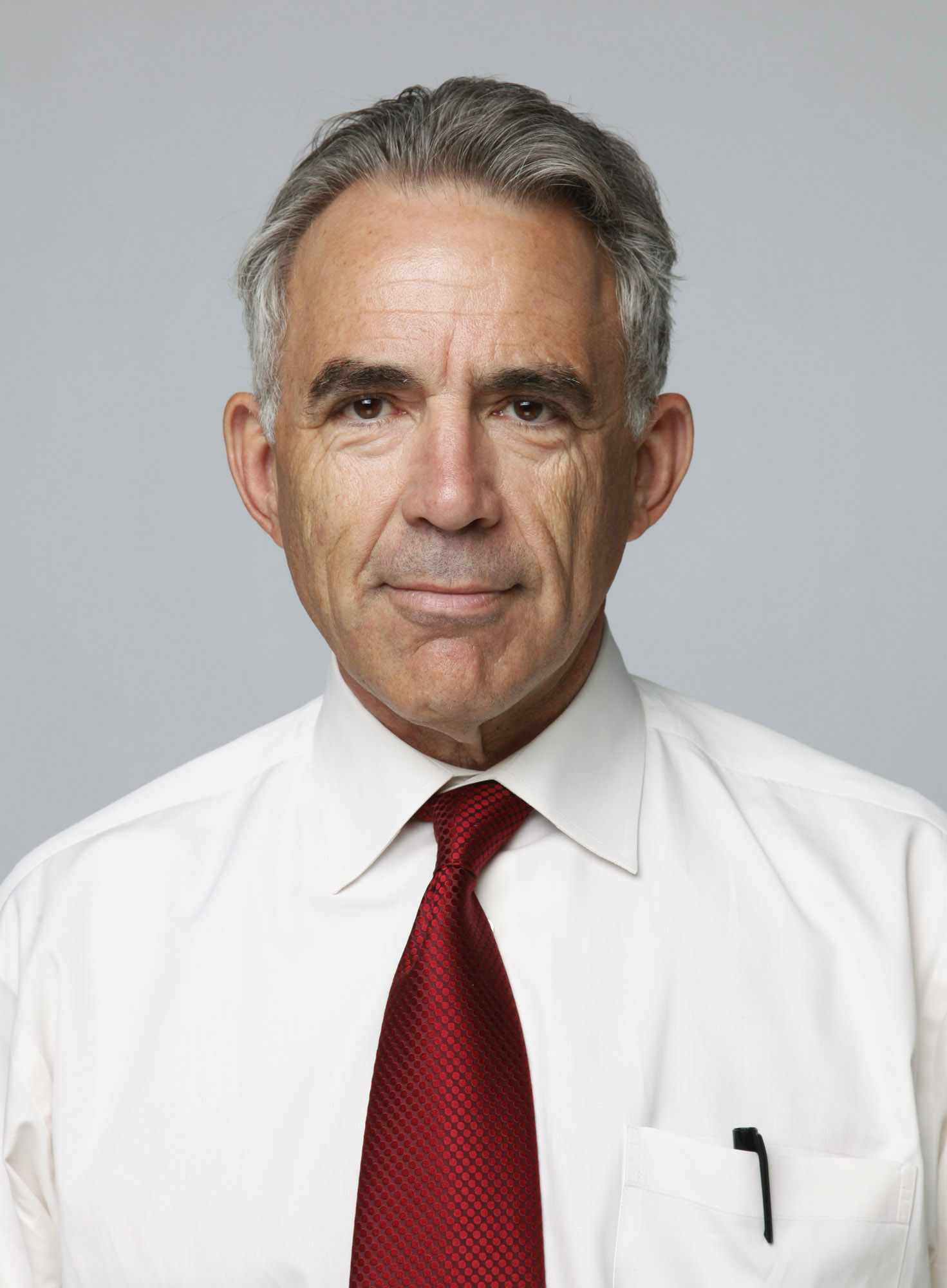
151. 8.3 Million New Neighbors by 2050—Henry Cisneros and Bob Rivard on the Austin-San Antonio Megaregion


This week on bigcitysmalltown, we turn our focus to the rapidly evolving corridor between San Antonio and Austin—a megaregion that is reshaping the future of Central Texas. Hosts Cory Ames and Bob Rivard are joined by former San Antonio mayor and U.S. Secretary of Housing and Urban Development, Henry Cisneros, to discuss his and Bob's new book, which examines the unprecedented growth, challenges, and opportunities along this urban corridor.
The conversation moves beyond headlines about population booms to examine the complex realities of life in one of the country’s most dynamic regions. What does steady and fast-paced growth mean for cities like San Antonio, Austin, and the many communities in between? What pressures does the region face, and how are city and state leaders preparing for the future?
They discuss:
• Why population growth in the Austin–San Antonio corridor is inevitable, and what’s driving it
• Visible strains on infrastructure—transportation, water, power—and the urgent need for regional cooperation
• Lessons from other megaregions across the United States—and what Central Texas must do to stay competitive
• How the region’s evolving identity, economic base, and cultural strengths can be preserved as the next wave of growth arrives
• The importance of building—not just roads and runways—but also new structures for cross-community collaboration and planning
• What happens if local and state leaders fail to act, and why the decisions made now will shape quality of life for decades to come
The episode provides a nuanced look at what’s at stake for San Antonio and its neighbors, urging both civic leaders and residents to consider what it will take to create a livable, equitable, and sustainable future for the region.
RECOMMENDED NEXT LISTEN:
▶️ #144. Building the South Side — How JCB Is Bringing 1,500 Jobs to San Antonio – If today’s megaregion conversation sparked your interest in economic growth and workforce opportunities, don’t miss this episode. Bob Rivard sits down with JCB Texas operations director David Carver to explore how a major new manufacturing facility is transforming San Antonio’s south side and what it means for local jobs, training, and the city’s future.
Cory Ames [00:00:02]:
Welcome to Big City, Small Town, the show about the people who make San Antonio go and grow. I'm your host today, Corey Ames. Today's conversation looks beyond the city itself to the rapidly growing corridor stretching from San Antonio up to Austin and what that growth means for the future of this region we call home. My guests today are Bob Rivard, yes. Host of Big City, Small Town and Henry Cisneros, former San Antonio Mayor and U.S. secretary of Housing and Urban Development. We were also joined in studio but not on mic by journalist David Hendricks. These three gentlemen were all co authors of the Austin San Antonio Mega Opportunity and Challenge in the Lone Star State, which is their new book that examines what unprecedented growth means for infrastructure, water, transportation, regional identity.
Cory Ames [00:00:57]:
In this episode, we talk about why this growth is inevitable, where the strain might already be showing, and why regional cooperation may matter more now than ever before. From my understanding this book here, the Austin, San Antonio Mega Region. Henry is building off a previous book that you worked on titled the Texas Triangle. And super quick, maybe a sentence to explanation. Can you share with us maybe what's the connection between that first book and then here, the Austin, San Antonio Mega Region?
Henry Cisneros [00:01:27]:
Well, I think the connection is that as we worked on the Texas Triangle book, which the triangle is Dallas, Fort Worth in the north, Houston in the Southeast, and Austin San Antonio in the Southwest, that we just felt the need to dig deeper into our own region and focus on Austin San Antonio. Briefly, about the Triangle. Never before in the history of the United States has A state had four cities within its boundaries that were in the 10 most populous in the country. And San Antonio now has Houston at number four, San Antonio at number seven, Dallas at number eight, and Austin at number ten. So this is a really powerful urban agglomeration, if you will, that rivals other major agglomerations in the country like Los Angeles, San Diego or San Francisco, Oakland or Bo Wash Region, Boston, Washington, Philadelphia to Washington, New York, and comprises the population in the county. Surrounding the tips of the triangle are 66% of the population of Texas now, and they produce something like 76% of the GDP of Texas. So people think of Texas as the land of wide open spaces and oil wells and ranches. And that's what our economy is not.
Henry Cisneros [00:02:52]:
So the economy of Texas is the port of Houston, the DFW airport, the technology in Austin, the universities in these clusters, the cybersecurity and biotechnology in San Antonio. That's the economy of Texas, international trade, professional and business services, new media. And so Texas, rather the Triangle is driving the future of Texas and Austin, San Antonio is a very critical piece of that. And we just felt it was time, first of all, to understand the efficacy of this concept of a Central Texas region. And when we did and got into it, I think we ourselves were stunned. And the facts of it. Today, there's 5.3 million people from north of Austin to south of San Antonio, I like to say Pflugerville to Floresville, 5.3 million people, which is a population larger than Louisiana. In that little region, it's a population larger than 25 states.
Henry Cisneros [00:04:01]:
And what the census tells us is by 2020, 2050, which is 25 years from now, exactly in 2050, they are projecting the population of the Austin, San Antonio mega region to be 8.3 million people. So in 25 years, the same distance we've come from 2000, that's laying a city the size of Chicago, 3 million people as we grow from 5.3 to 8.3. So that kind of is the context, the shocking context, if you will, of this book.
Cory Ames [00:04:34]:
Well, in the most of our conversation, I'd like to focus on forward looking, what the implications are for our city and the region. But first, why do you think this is the case? Why has the Austin, San Antonio region become such of a hotspot? Maybe it's layered in your response there before connecting the two books. But what's made this place so appealing?
Henry Cisneros [00:04:56]:
Well, I think probably the most significant thing is we're in Texas. And Texas is the. I mean, there was a time a few years ago when Texas was creating as many jobs as the other 49 states combined. And we still have the greatest in migration of any place. Literally hundreds of people come to every city, thousands to the region, daily, daily. Why? Because of the tax structure in this state. Because of its reputation as being business friendly. Because the demographics of the population here are young and growing right internally, because we have this wonderful riches of universities like the University of Texas&Utsa&A&M San Antonio&Trinity&St Edwards Community Colleges that are among the country's best.
Henry Cisneros [00:05:51]:
The Alamo College literally could be said to be the very best in the United States. You put all that together and then you add on top of that the mythical Texas. The legend of Texas is a place where you go to start over, the place where you go to create. And it's kind of a ready made formula for growth.
Cory Ames [00:06:12]:
Well, and let me ask you, Bob, for maybe one more piece of reflection. In your decades reporting on the city of San Antonio, do you feel surprised at this sort of outcome and growth in the day and age that we are, or does it feel like it was some sort of this is inevitable, or maybe an accumulation of much of the progress and growth that the city's had in decades previous?
Bob Rivard [00:06:36]:
I'm not surprised at all. I'll just reflect back on about 10 years ago when our two sons were both considering moving back to San Antonio after leaving the city and the state and even the country to find their futures. And my brother from Boston called me, my older brother Ken, to say that our younger son Alex was moving back. And he said, you need to disabuse him of a ridiculous idea he has that he's going to come back to San Antonio and buy a house in a historic neighborhood for $100,000. It was just incomprehensible to my brother. He goes, you know, a good starter home in Boston is 4 or $500,000 at the time. Well, my son came back and bought a house for $85,000 in Dignity Hill. And you know, that house today is probably a $250,000 house.
Bob Rivard [00:07:20]:
But the point is, one of the attractions to San Antonio and all of Texas is, is our cost of living. And yes, it's much more expensive than it was a decade ago, but it's still a bargain compared to life on either the west coast or East Coast. So I'm not surprised by the growth and the opportunity for all the reasons Henry talked about as well as the cost of living. But I think what we wanted to do was to say we need to get past the front page news stories about San Antonio fastest growing city or Austin fastest growing city, and everybody saying, yay, we're the fastest growing and going. Yeah, but what are the implications? And by the way, it's not just Austin and San Antonio, but it's multiple cities that are in the corridor and in and around the corridor. All you have to do is be at New Braunfels or San Marcos or Round Rock or Bernie or Seguin at rush hour or even times at not rush hour to see how fast those cities are outgrowing their infrastructure. So I think it was important for us to say we need to take a step back and instead of just crowing over our growth compared to other parts of the country, we need to examine closely what are the implications of this growth and are we ready for it and what's it going to be like in 20, 30, 40, and 50 if we just keep the current course and we don't make more definitive plans to meet that growth?
Cory Ames [00:08:43]:
Well, and we can Start to get into that now. I mean, population growth is a good thing. You look at cities across the country or even countries across the world, if population is declining, that is a very negative sign for perhaps the health of that country and that future economy. And so it's a good thing. It feels like it's inevitable. And so it surely seems like the question is now how do we proactively manage it to the best of our ability. And you mentioned infrastructure there, Bob. First off, let's start there at the high level because I think that maybe the first question that comes to people's minds and certainly mine is just handling that many people.
Cory Ames [00:09:17]:
Energy, water, et cetera, et cetera. So if you all could maybe spell that out a little bit more. What at a high level, those infrastructure needs or maybe are we most hurting right now and most need to address?
Henry Cisneros [00:09:28]:
Well, I think Bob's completely right to say the first thing to do when you see the numbers is then to look at the implications. And the implications are that growth demands to be addressed and to pick the areas of significance. Obviously traffic and congestion is one that's immediately obvious. If you don't build the roadways, if you don't go the next step and do things like build rail, then you will be mathematically, predictably certain to be congested and overcrowded and the quality of life declines. And the amount of time people are waiting on freeways standing still increases. So traffic and interlinked transportation systems is one of those. Water is particularly significant in this region. We live in a generally water scarce area of the country.
Henry Cisneros [00:10:24]:
God forbid we should have a drought like the drought of record of the 1950s because they wouldn't be able to sustain the growth. But what that means is you have to think about things like desalination, which Corpus is doing, extending lines to aquifers where there is water that don't require those volumes and are willing to sell some portion of it. Conservation, conservation on a major, major. San Antonio has actually grown dramatically in population but not in water total usage because of conservation measures. So that's another one. Power. You know, you can plan power the way we did and it seemed that we had adequate power for the long run. But you can't anticipate things like data centers, which the Microsoft Data center here in Bexar county uses more power than the Toyota plant that produces 240,000 tundras and sequoias every year.
Henry Cisneros [00:11:28]:
That's the thirstiness of for power, electric power of a data center. And we used to consider ourselves lucky that we had a Microsoft data center. Now we have six and seven lined up to be built in this area. And Austin even more so power. Then there's issues like environmental quality and open space. I'm very excited about the work that former county judge of Riel County, Gary Merritt is doing on what he calls the Great Springs project that would link Barton Springs in Austin and all of the creeks and roadway, I mean, and trails between Austin and San Antonio, through Kamal county, through San Marcos, through to the Blue Hole and then that easily extends itself along the San Antonio river, along the entire riverwalk and river reach. So that's another issue. If we don't think about something like Great Springs now and plan it now, it will not exist.
Henry Cisneros [00:12:37]:
There will be subdivisions and there will be costcos and there will be hevs all along that route. But not a definable way to connect the places with a green trail. Right. And then there's all kinds of other things like for example, air connectedness. Great regions have to have world class air connections. Now Austin's been adding substantially to its international connections. We have international connections, they tend to be mostly to the south. But a collaboration between Austin and San Antonio to make sure that the people of the region have the best air connections we can possibly provide.
Henry Cisneros [00:13:18]:
And I think that's going to end up being something like you see in the Los Angeles area where you choose to fly out of LAX or Burbank or Long beach or John Wayne in Orange county or even San Diego. Multiple airports strung across the region. At least two big ones with Bergstrom and San Antonio. So those are the, as Bob said, those are the implications. I think it really has two pieces. One, understanding what happens if you don't act and then secondly, actually charting out in some sort of visionary way what we need to be doing.
Cory Ames [00:13:58]:
Absolutely. Well, it's certainly securing not just the livability but the safety and security of the communities throughout this region. You talk about water as a human huge example. Energy as well. I mean, we're all too familiar with tragedies on both accounts in the last few years. I'm worried. You mentioned the Great Springs project for one, that I'll be able to bike one day to Austin quicker than I'll be able to drive.
Henry Cisneros [00:14:21]:
If you can bike 75 miles, I'll.
Cory Ames [00:14:24]:
Work up to that. The training regimen will still all be faster, I think, than that drive sometimes feels. But you mentioned collaboration there, Henry, and it seems, it seems like that's almost too an understatement because it's dealing with so many Various communities there, but as well the state. What's the outlook for that level of strategic work together, both in the region, but dealing with state authorities especially. As we're talking about transportation, we have.
Henry Cisneros [00:14:52]:
A long way to go. We've been acting like two different cities, and each has a cluster of communities around them. And by the way, that cluster north of Austin is nothing to sneeze at. We're talking about cities like Round Rock and Georgetown and Cedar park and Leander and Pflugerville, several of which are about 130,000 people each already. Williamson county north of Austin, and then the corridor itself, San Marcos and New Braunfels. But then there's another cluster at the southern end here, which includes very prominently Seguin, which has become a serious manufacturing center with Holt there and the Japanese manufacturers there. And not a month passes, there's not some new announcement of advanced manufacturing related to Seguin, perhaps because Sh130 now connects northern Austin, and along the way is that Tesla plant that's about three quarters of a mile long, and just off of that, the new Samsung plant at Taylor, which is a $45 billion semiconductor plant. So that's what's happening that needs attention.
Henry Cisneros [00:16:11]:
What I think is most clearly lacking. There's a lot of things lacking, and we could talk about each one of the areas of infrastructure and talk about what's lacking, but I've come to the conclusion that the most serious gap at the moment is a venue, a structure where the leaders can talk to each other. And I don't mean just the mayors and the county judges, but the leaders of the universities and the leaders of the community colleges and the leaders of the health institutions and the leaders of the business institutions, the Chamber of commerce. There's something in the Dallas Fort Worth area called the North Texas Commission that has worked very, very well. And we tend to ignore, not know, just what all has happened in the DFW area. But it's pretty doggone impressive from dfw, which was wished into existence by, led by Mayor Johnson, Eric Johnson, the then mayor of Dallas, but the growth of communities, the quality of life, the rail systems that connect them, it's easy to pooh, pooh that and say, well, you know, that's just Dallas Fort Worth braggadocio. But I think it actually is a region that works. And that's why Dallas Fort Worth has become for 21st century America what Chicago was to the last century, the heartland capital of the nation.
Henry Cisneros [00:17:42]:
That's about what Dallas Fort Worth are. So I think there's lessons to be learned from the kind of structure they've created. I heard someone say it's not good enough to have these discussions at a cocktail party and leave excited. You have to have systems and structures where people can not just talk but then work, act, create, execute well.
Cory Ames [00:18:09]:
And Bob, what about from your perspective, do you identify as maybe the greatest sticking points or leverage points? Whether it's working in state legislature, local leaders or what have you, what do you feel like is maybe most essential to bring a more cohesive region together?
Bob Rivard [00:18:24]:
The best thing about mega region, besides the data that it offers people and the organized way it presents that data, not just in the two cities but all the corridor cities we visit, is that it's a call to action. The state leaders, the top leaders that come here, they come in airplanes. They're part of the state fleet. If we could ground those airplanes for a few months, Corey, and have those leaders drive on I35, we very quickly would come up with a mass transit solution because they would find out like the rest of the world that we're at absolute gridlock. It's contributing enormously to the worsening air quality. It's economically a real buzzkill because we lose a lot of productivity and efficiency by time wasted in bumper to bumper traffic. It only takes one serious fender bender there before you have DPS emptying the entire interstate out in one direction. And you know, a 70 minute trip can turn into a three hour trip.
Bob Rivard [00:19:21]:
And so we really hope the state top elected leaders and people in the legislature look at this and say there's a lot to take pride in over what's happening in San Antonio and Austin and all the corridor cities and a lot of opportunity. But we need to invest some serious funds that only the state legislature has its hands on. We're so blessed with our state economy, the kind of windfall revenue we have. There's not literally another state in the country that has the kind of rainy day fund that we have, which is now almost at $30 billion or billions more in unallocated funds from the last sessions. So the money is there to act on some of these issues. The organizational structure that Henry mentioned we need is not there. We just elected a mayor in San Antonio, Mayor Gina Jones. Next year we'll either reelect County Judge Peter Sakai or former mayor Ron Nirenberg's running against him.
Bob Rivard [00:20:21]:
Those elected officials need to think less about I'm in charge of the county or I'm in charge of the city and realize they're part of a larger regional Entity that desperately needs a larger entity organized as a public private partnership, I believe so that, as Henry said, it brings in cultural, education and business leaders, as well as public officials that get together in an organized, regular, predictable fashion with a clear mission and mandate to address the opportunities and challenges in the region. We don't have that. We have metropolitan planning organizations. We have a very good function. Austin has its one. The San Antonio Austin Corridor Council exists, but there is real no entity where people are getting up every morning saying, it's my job to think about the implications of this unprecedented growth and the opportunities and challenges that it creates. And we sometimes think too much about the challenges because they're right in front of us. But they do require immediate attention, in my view.
Bob Rivard [00:21:24]:
And what we're going to have to do, I think, is step back and figure out first, how do we create the entity, like Henry talked about existing in North Texas, that can address these problems? Because individually, a given mayor, county judge, chamber of commerce head, you just can't make any headway with sort of meetings every quarter, every year, where you get together and people reconnect, but not much gets done.
Cory Ames [00:21:47]:
Yeah.
Henry Cisneros [00:21:48]:
You know, Cory, it strikes me that people maybe listen to a conversation like this and say, well, why don't we just check out of it? Why do we just not do it? Why do we not just stop doing whatever is creating this growth? Because I like my life pretty much as it is. And if we're going to have all these problems and they're going to cost money, maybe the best thing to do is just say we're opting out of that game. But I think one of the key recognitions is this is going to happen. The census says you're going from 5.3 million to 8.3 million people. There are larger forces at work, larger forces unleashed that are going to continue to bring people here. And so it's really not a choice between saying, let's not do it, and we will be fine. Let's not do it means we're going to be congested, erratic growth, reductions in the quality of life, and a pretty troubled place. So what you have to do is recognize that the growth is going to occur and.
Henry Cisneros [00:22:47]:
And then prepare. And certainly, the kind of conversation and structure that we've discussed is one of those things. But there's a lot of actions that are taken independently across the region to add to power, electric power, or to address the water questions, or to put in place not just roadways, but new technologies of transportation. And that's what I'd like to believe is the message that we're conveying. Folks gotta face up to the reality and plan for the future and think ahead with new, think outside the box, you know, new strategies. And this can be really one of the best places in the country to live because we're going to have the opportunity, the incomes are going to grow, wealth is going to be created. Now you match that then to training of the workforce to bring new people into the world of opportunity, and you can have a pretty exciting place here for the next hundred years, the rest of this century. And we cite in the book places that seem to be unstoppable in American history because they had, they seized the moment.
Henry Cisneros [00:24:06]:
They were the economic center of the country at that time, like New England and textiles and the early industry of the country. And they lost their moment after World War II because Detroit had been the arsenal of democracy, making tanks and airplanes. After World War II, we had this consumer explosion and it resulted in cars. And Detroit became the center of that and then just missed the changes that the public wanted in terms of smaller and more gas, responsible and so forth. Japanese stepped in. Detroit once had 15 automobile plants in the city, now has two. Detroit was once a city of 2 million people. It's got 650,000 now and troubled, deeply troubled, bankruptcy, troubled.
Henry Cisneros [00:25:00]:
Silicon Valley has been that place the last couple of decades. But people can't afford to live there because they didn't produce housing. It's congested because they didn't extend the rail system from San Francisco and the East Bay down into the Peninsula. So just because you have a golden moment, just because you think you deserve the golden moment on what has been achieved. Urban life, public life is not that easy. You have to think about sustaining. You have to think about expanding into the future. And that's, I think, where we are in Austin, San Antonio.
Cory Ames [00:25:44]:
There's a couple things there. And I think first, for people really to fathom what is in our control. How do we kind of take hold of our own destiny, so to speak. You know, we talked about water earlier, and I think the reason that San Antonio had the success that it did, at least, or the greater area, is that we were really able to act in a different way because of the regulation, because I believe the endangered salamander was found in there, and that was connected to the Endangered Species Act. So we were able to regulate water pumping rights in the Edwards Aquifer in a different way in which everyone else was able to do with their own respective aquifers.
Henry Cisneros [00:26:18]:
Took us about 30 years to get a plan in place. And then when it was clear we don't have an everlasting source of water in the aquifer, we did the Vista Ridge pipeline, which brought about a quarter to a third again of our water supply at that time from Burleson county. And that comes 150 miles. That's not an accident. That's forethought. And that's the kind of thing that we'll have to do in many of these other areas. So to answer your question, we have the capacity to act independently across the region, and many will, but it just works better when people are talking to each other and working together. And that's what I think we need to be doing.
Henry Cisneros [00:27:06]:
We can create a two plus two equals five moment here and live in a very special place.
Bob Rivard [00:27:13]:
I do think we can learn from each other, too. Cory, you don't have to scratch the surface very hard in Austin to find people that are very unhappy with the city it's become versus other people that live there, that are very happy, that are new newcomers, and love the city that they're living in. There's a real dichotomy between the old Austin and the new Austin. When I moved here in the 1980s to San Antonio, Austin had a population that was 400,000 plus. Now, as Henry said, it's the 10th largest city and a million and growing, growing by leaps and bounds. They didn't take care of their cultural assets as much as I think we value them in San Antonio. And if you look at what happened east of I35 in Austin, that change is profound and not for the better. In many ways, in my opinion, there was, you know, massive dislocation of particularly what I would call Austin's barrio, you know, the Latino population of the city that lived over there.
Bob Rivard [00:28:14]:
And it was a tale of two cities split by I35. And now it's. It's on the east side. It's prohibitively expensive for longtime residents. So I think we can learn a lot in San Antonio because we haven't had that kind of exponential growth that they've had with major corporations and tech of as we've built our own bioscience economy, our advanced manufacturing economy. We've. We've made major investments in the south side that I think have benefited everybody down there. And I think we need to constantly be talking among ourselves here in Bexar County.
Bob Rivard [00:28:51]:
How do we make sure that San Antonio stays the unique city that it is, three hours from the border, profoundly influenced by its history with Mexico and Spain? And its minority majority population. And how do we avoid that? At the same time, if you read Austin's 50 year water plan, it looks like they took San Antonios and erased San Antonio and put the words Austin in. They get all their water from the Highland Lakes, the Colorado river and the Highland Lakes. We were so smart to do what we did and everything that we did was met with resistance and serious protest. But when I moved here in 89, 100% of the water came from the Edwards aquifer. We now have brackish water desalination in South Bexar county that services everybody. We have injection wells that have almost an entire year's supply of the city's water in those injection wells that could be pulled out. We've never had to pull it out since we started to inject the water.
Bob Rivard [00:29:52]:
And we have, as Henry said, Vista Ridge, which is producing more water than we can use. And eventually it wouldn't surprise me if some of the corridor cities come to us to repurchase water. And so now our aquifer produces about 50% of the water we use, which is much more sustainable, particularly in the drought cycles. And I think Austin aspires to do all of those things. They haven't done them yet, but it's on their drawing board and they'd be smart to do them well.
Cory Ames [00:30:22]:
I mean the basic utilities are certainly one thing. Bob, you mentioned the story of Austin perhaps shifting in culture, maybe faster or more dramatically than people would like. There is that tension there and that's no secret for people. And so I'm curious, from Yalls perspective, how does San Antonio most safeguard that? I mean, we're definitely two different cities, but affordability is. When my wife started law school here at St. Mary's that was what first appealed to us about San Antonio. And then we fell in love with the culture, deciding to build our family here thereafter and purchased a home for maybe a quarter of the cost that it would be to buy in Austin, you know, looking at comparable housing prices. And so what can San Antonio do differently, acting with foresight like you mentioned, with water to perhaps keep an integrity with the culture that it has and serving the residents that live here now, not just higher wage earners potentially that might move in to the city in the future?
Henry Cisneros [00:31:20]:
Well, I think you are correct to put the arts and culture and a sense of heritage and history into the same language, into the same list as the basic utilities and the other infrastructure because it really is so different and so special about San Antonio issues like the way we think about water and green and green space here from the river all the way down the river reach the missions. I'm involved with the San Antonio Arboretum, a new opportunity on the south side for really reflection on nature. To the various ethnic groups in San Antonio. The Hispanic community, the African American community, various national origins, a strong Italian population, German heritage, all of that mix. On the one hand, I don't worry about it because San Antonio knows how to put on a party at the drop of a hat. I mean, give me a weekend that's open and we'll fill it with some kind of fiesta. But fiesta itself is glorious. I've been to other fiestas in the country, like for example, Mardi Gras, and this one is not only colorful and loud, but it's family oriented.
Henry Cisneros [00:32:41]:
And that's not the case in others across the country. So on the one hand I don't worry about it, but I think it is correct to consciously think about how we accentuate, how we emphasize how we and how we allow it to flourish. There is great pride in our respective cultures here. And that's a wonderful thing. You know, a thousand flowers blooming is the San Antonio story.
Cory Ames [00:33:10]:
What I wonder, and especially in relation to the passage of the most recent propositions this voting cycle this last November, you know, we talk about diversifying San Antonio's economy and I think that there's some really incredible success stories that y' all talk about here in the book. Throughout the past, one thing that's felt like a little bit of critique is our over dependence on a tourism based economy.
Henry Cisneros [00:33:31]:
That used to be the case. That is not the case now. We have the number one employer in San Antonio as an industry is the biosciences. 190,000 people. And that is because we have biomedical education, nursing school, dental school, several medical schools, osteopathic medical, incarnate word and the medical school At UTSA we have medical research like Texas Biomed and the universities. We have the military medicine, which is both education and research. We have great clinical capabilities and we have increasingly companies in the biosciences. So that's a big base.
Henry Cisneros [00:34:14]:
Then there is an increasing base of advanced manufacturing. What's going on at Port San Antonio? The Toyota plant. Toyota plant. 240,000 vehicles a year. JCB, a British manufacturer of tractors. What used to be called International Harvester, goes by Navistar. They're producing trucks here. In my time, and I'm saying during the time I was mayor and certainly before that when I was a council member, to have talked about automotive plants Here was unthinkable, not possible.
Henry Cisneros [00:34:49]:
And yet we ended up with the Toyota plant in the area of town that needs it the most, the south side Southwest school district. So that's advanced manufacturing, CyberSecurity. With the 24th Air Force here, about 20,000 jobs spun off off the post off the base. 20,000 jobs related to cybersecurity. And then we go on finance and other sectors. We have a large tourist industry, but it's not the industry that carries the city anymore. It's large, it's significant, it brings people here. It's an export industry because people come and leave their money here.
Henry Cisneros [00:35:33]:
But it's no longer. We're no longer a one industry town. In my early years in public service, we had two industries. Tourism. That's the hotels, the convention center, the Riverwalk. That's grown because now we have Fiesta Texas and SeaWorld, et cetera. And the military. And we had five military bases at that time.
Henry Cisneros [00:35:55]:
We now have Fort Sam Houston and Lackland and Randolph active, major, nationally important military bases. But even those two together are not the majority of the economy anymore.
Cory Ames [00:36:10]:
Well, I only bring it up just because I feel like the sports and entertainment district that can come will only seem to like, bolster our tourism economy. To me, I would think that it would not that it would necessarily change the percentage of the total GDP of San Antonio. Antonio, and not that it would affect the other industries. Perhaps it would in fact enhance it and make San Antonio a more compelling place to live or, you know, or bring business to. But the tourism economy of San Antonio is not necessarily going away. And what I see in Austin, as research has shown, is that they've not necessarily reduced poverty. As income has increased, they've displaced it.
Henry Cisneros [00:36:43]:
Yeah.
Cory Ames [00:36:44]:
So lower wage earners have moved to the various suburbs and poverty rates in the suburbs of the Austin area have dramatically skyrocketed.
Henry Cisneros [00:36:51]:
That's a good point.
Cory Ames [00:36:52]:
And so for me, thinking about, and I think the manufacturing is a great example of finding the economic growth in San Antonio that's really fit and appropriate for San Antonio and where the type of labor force is at. How do we also continue to make. Because I think, to me, I'm saying the tourism and hospitality industry should be even more important because we've got to be world class.
Henry Cisneros [00:37:13]:
I never saw the spurs arena as designed to bolster the tourism economy. I know some people thought of it that way, but I thought of it more as a defensive proposition. I didn't want our city to lose part of its identity on the national and even global scene. In losing the Spurs. And I think there was a good chance we would have lost the spurs if they had been defeated here. There were at least four cities, Seattle, Las Vegas, Austin, Nashville that would have been knocking on their door the next day. And to me, you just can't go forward while you take that kind of hit. Okay? Secondly, I am totally in accordance that one of the great needs in our community and one of the things that we can we need to use the mega region momentum to tap is a need to deal with long term pervasive poverty.
Henry Cisneros [00:38:11]:
And I don't think we as a community have ever done a thoroughly intellectual deep dive into understanding the nature of poverty. In San Antonio we talk about poverty as if it's a monolithic thing. But poverty is because some people are disabled. Poverty is because some never have a chance at a decent education. They were born here, some because they just arrived in the last months and they are in the lowest point on the totem pole. Some because they are fallen into a negative economy of addiction and drugs and so forth. You could break it down into probably sort of eight different groupings. And we've never said let's try to get and understand programs that deal with.
Henry Cisneros [00:38:58]:
We tend to be eclectic in the sense of organizations. They found a cause, they deal with it. It's like a drop of food coloring in the ocean. It's not going to make a difference. That's a task that's before us. And luckily there's some people in town now who are talking about looking at pervasive poverty that way. But I will say this. I'm a Democrat and I believe in the role of government, but I will.
Henry Cisneros [00:39:30]:
But we're not going to solve poverty with government strategies alone. We have to have strong market solutions because that's where the jobs are. That's where the Toyota comes from, that's where the advanced manufacturing jobs are. That's where the biosciences are going to grow and harness that to work for our marginalized people. But to harness that means you have to do the practical things of keeping that momentum going. And you can't do things like run off the spurs and say, but we're still a city that wants to be on the national scene, thought of as a destination for jobs and investment. These are very delicately interconnected things.
Bob Rivard [00:40:12]:
I would add to that. You don't have to be a social scientist to know that growth in itself is not a strategy to address poverty. And any city, anywhere you look at in history, the marginalized people are often the immigrants. Where there's language issues and new arrivals and where there are people that are, that lack the educational opportunities or have not taken advantage of the educational opportunities to participate fully in the economy. So the good news for me, Corey, as somebody that's been here quite a long time, is I've seen the city population almost double in my time. The poverty rate is a few percentage points lower. So our poverty didn't grow with the city. It diminished a little bit, not enough.
Bob Rivard [00:41:00]:
But when you look at two things happened. Number one, advanced manufacturing is largely populated by people without college degrees. And if you look at what has happened at the Alamo Colleges where there's currently about 80,000 students enrolled, it is enormous undertaking.
Henry Cisneros [00:41:16]:
88,000.
Bob Rivard [00:41:17]:
88,000. Now, particularly with the Alamo Promise, which is letting so many Bexar county residents go to those schools tuition free, graduate without debt, we're making it way easier for people in the current generations. Which doesn't help their grandparents or even their parents who may not have graduated from high school. But it is helping the future generations acquire the technical skills and degrees that they need to go out to Toyota where the average W9 is probably $100,000 a year. People are making real money, good middle class incomes that wasn't there 10 or 20 years ago. And that's tens of thousands of jobs. Just Port San Antonio has 19,000 of them that didn't exist a decade or two decades ago. And you don't need to have a four year degree or an advanced degree to get those jobs.
Bob Rivard [00:42:07]:
And then second of all, the Alamo Promise now has this pipeline of people that it's producing saying you can come to school. We know a lot of you are married, we know a lot of you have children. We know a lot of you are working full time. We're going to help you get through debt free. Then you can decide do I stop there with my technical degree and go to work in advanced manufacturing or wherever healthcare, or do I go on to that four year degree and you now have A and M San Antonio and UT San Antonio saying we've got our own Promise programs so that you continue in that vein and we'd like you to finish the four year degree without that burdensome debt. I think that's helping a lot of people culturally and families where you're a first time college student say hey, this is an investment. Don't be afraid of sending your children to school when they could go to work right now and get a paycheck. Because the paycheck they're going to get is not that good.
Bob Rivard [00:42:57]:
And it'll never get that much better. And so I think we're doing some things here that really address the issue. We need to do a lot more. But it's not all negative in my view. There's some positives that are showing that we've made progress with some things. And it just takes me back to what I believe the universal path to leveling the playing field is education. It's not the private sector. You've got to get the tools in your toolbox to be able to compete in a 21st century economy.
Bob Rivard [00:43:30]:
And the only way to do that is to stay in school and create options for yourself. And so we're showing progress on reducing the dropout rate. We're showing progress in getting more kids out of high school and into advanced education. And we can't invest enough in that. And we need the state to invest even more. Our per capita investment in higher ed and in PK to 12 is not where it should be. And we've got the resources to do more.
Cory Ames [00:43:57]:
Absolutely well. And I think that there's so many great things that San Antonio is doing and it's a very community driven city.
Henry Cisneros [00:44:03]:
It's phenomenal what's happening on the education front. Bob's touched on a good number of them, but between the community college, the improving in the public schools, to like magnet schools and so forth, the charters, some of them very creative, really doing some phenomenal work. The ready to work program, technical education of all kinds, particularly for example in the biosciences and advanced manufacturing. The recent community college bond issue had in it advanced manufacturing with Toyota at Brooks. There's an awful lot happening there, which is glorious. We've got some really, really good people doing the work right now. Now at the same time we have to create the openings and the jobs that people coming out of these programs can relate to. You know, we got a wagon full of educational programs that have to be hitched to an engine to be pulled.
Henry Cisneros [00:45:02]:
And that's why we have so little margin for error in pursuing the companies. And when we are in an area like the mega region like Austin, San Antonio, where we have advantages coming our way, people coming to give us a look that wouldn't have before. National figures bringing and relocating their major investments here, I think it could be something really special.
Cory Ames [00:45:31]:
Absolutely. And it seems like the city and the various affiliated groups, Greater satx, for example, have done a really good job at recruiting the right types of companies. Henry, your work as well with Toyota, for example. I think that that's A completely different fit perhaps than maybe the scene that you have seen in Austin. Those are just different companies. Not that there aren't bad companies there or that there aren't good companies there, but it seems really important to have the right type of corporate citizens brought into Bexar county, because on an individual level, the educational attainment does make a huge difference. But it doesn't mean that those jobs that those people once held are going away. That person may ascend into a higher wage job, for example, but that low wage job still exists somewhere in San Antonio.
Cory Ames [00:46:17]:
And so I think it's either finding ways to bring those up or having great corporate partners, you know, and give examples of that, of the hebs of the world, what have you, to make sure that people in San Antonio are, you know, taken care of as they should be.
Henry Cisneros [00:46:28]:
Yeah.
Cory Ames [00:46:31]:
Well, you know, I think the conversation has spanned many different directions. If there are any sort of last sentiments of what do you feel like are, you know, calls to action for both city leaders and regional leaders to respond best to this, the inevitability of the Austin San Antonio mega region evolving and emerging. What would you say? What would you offer?
Henry Cisneros [00:46:52]:
I would say we have to make the most of this opportunity. And that means getting local public officials to raise their horizons, their sights above the day to day things that are expected of them in their own communities and think how these things work together on a regional basis. And if we do that, with so many positive developments coming our way, if we're acting creatively on transportation, on water, on education, on training programs, on explicitly addressing poverty, we could live in an area that would truly be exemplary on.
Bob Rivard [00:47:33]:
A world stage, you know, for people in other corridor cities and Austin that might, might come across the podcast. Cory, we're going to devote some, I think, significant time in 2026 to taking the launch of the book here in San Antonio, which we've done. Henry was at the Texas Book Festival a couple weeks ago in Austin. So it's not like it's only happened here, but we're going to make more of an effort to get up into the corridor cities and get up into Austin. We don't want the book to just find its place on the shelf. We want people to go, this is a call to action book. And these guys are right. No matter what your politics are, this growth is unstoppable.
Bob Rivard [00:48:13]:
We're not planning in a regional, comprehensive way for it. What do we need to roll our sleeves up and do? We don't pretend to have all the answers, but we think that a clarion call to get people's focus on not just your, your silo, your city, your county, but to look at the whole region is critically important in the time to do it's now.
Cory Ames [00:48:33]:
Excellent. All right, well, Henry Cisneros and Bob Brevard, as always, thanks for joining me on Big City Small Town.
Bob Rivard [00:48:39]:
Thanks for having us.
Cory Ames [00:48:43]:
All right, y', all, thanks for listening to this episode of Big City Small Town. My thanks to Henry Cisneros and Bob Rivard as well as David Hendricks for all taking the time to sit down with me in studio. This episode was made possible with support from Geekdom, Westin Urban and Plains Capital Bank. We're grateful for their continued investment in these important conversations here in San Antonio in the region. If you'd like to keep up with these conversations, you can sign up for our Big City Small Town newsletters, Bob's Monday Musings, and My San Antonio Something. You can find links to each of those newsletters in the show notes below, or you can go to bigcitysmalltown.com thanks for listening again. I'm Corey Ames and we'll be back in 2026.
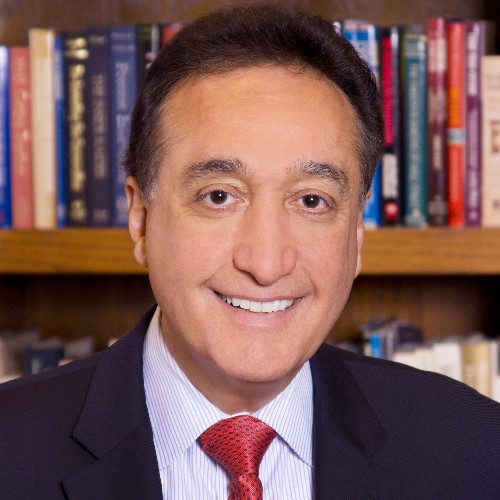
Former Mayor of San Antonio and former U.S. Secretary of Housing and Urban Development
Henry Cisneros is the former mayor of San Antonio and served as U.S. Secretary of Housing and Urban Development under President Bill Clinton. A prominent civic leader, Cisneros played a pivotal role in the growth and modernization of San Antonio, spearheading major infrastructure initiatives and economic development. He is a co-author of "The Austin San Antonio Mega Opportunity and Challenge in the Lone Star State" and is recognized for his expertise on urban policy, regional cooperation, and sustainable growth strategies. Cisneros, a graduate of Texas A&M and George Washington University, brings decades of leadership experience to discussions about the future of the Austin–San Antonio mega region.