149. How AlamoPROMISE Continues Expanding College Access for San Antonians


This week on bigcitysmalltown, we examine the Alamo Promise program—a tuition-free initiative from the Alamo Colleges District aimed at lowering barriers to higher education for Bexar County high school graduates. The program, now entering its sixth year of enrollment, has set out to make college accessible to all students regardless of income, academic standing, or background.
Host Bob Rivard is joined by Stephanie Vasquez, Chief Program Officer for Alamo Promise, to discuss the impact of the program, the challenges facing students in San Antonio, and the realities of retention and completion in the community college system.
They discuss:
• Why Alamo Promise provides universal access and how students qualify
• The growth of college-going rates in Bexar County and persistent completion gaps
• What wraparound supports—like transportation, childcare, and counseling—exist for students facing obstacles beyond tuition
• How the program is funded and what sustainability looks like for universal tuition
• The lessons learned from serving over 30,000 Promise scholars
• Efforts to improve graduation rates and debate over enrollment requirements
• The evolving discussion around educational attainment, local workforce needs, and the fight to reduce San Antonio’s high poverty rate
For students, parents, and community leaders tracking equity and opportunity in local higher education, this episode provides an in-depth look at one of San Antonio’s boldest experiments in college access.
RECOMMENDED NEXT LISTEN:
▶️ #11. How To Achieve Your Higher Education Dreams through Alamo Colleges with Dr. Mike Flores – Discover how Alamo Colleges breaks down barriers to college access for all students. In this episode, Bob Rivard talks with Chancellor Dr. Mike Flores about busting higher ed myths, the power of the Alamo Promise, and how flexible pathways support student success in San Antonio.
-- --
CONNECT
SPONSORS
🙌 Support the show & see our sponsors
THANK YOU
⭐ Leave a review on Apple Podcasts
⭐ Rate us on Spotify
Bob Rivard [00:00:00]:
Foreign.
Bob Rivard [00:00:05]:
The weekly podcast all about San Antonio and the people who make it go and grow. I'm your host, Bob Rivard. This week's guest is Stephanie Vazquez, the chief program officer for the Alamo Promise program at the Alamo Colleges District. Stephanie, welcome to big city, small town.
Stephanie Vasquez [00:00:20]:
Thanks for having me.
Bob Rivard [00:00:21]:
This is kind of a big time for you. Five year anniversary for the Alamo Promise and actually it started in 2019, so we're a little bit behind in celebrating the anniversary.
Stephanie Vasquez [00:00:32]:
Yeah. So we've completed our five years of Alamo Promise enrollment. We were fortunate to launch back in 2019 and we enrolled our first class of students back in fall 2020. So you're right, we're here at our six. We actually have six years of students enrolling this fall. But this has been a really nice time for us to look back and celebrate and see what's been going on in the last five years and all of the students we've been able. So it's been a really, really busy past five years.
Bob Rivard [00:01:03]:
I can't imagine there's anybody in the city and county that has not heard of the Alamo Promise, but maybe there is. So what is it?
Stephanie Vasquez [00:01:09]:
Sure. So the Alamo Promise is the Alamo College's really main response to our moonshot to partner to end poverty through education and training. And what we do at the Alamo Promise is provide tuition free college education to Bexar County High School graduating seniors. So any student high school student in Bexar county that's graduating from one of our Bexar county high schools or lives in the area can attend any one of the Alamo colleges tuition free.
Bob Rivard [00:01:35]:
And originally the program started with just select high schools in, in certain districts, but now it's everywhere. So one of the things that confuses me about the program is why you underwrite tuition for families that are upper middle class or wealthy, but you every, everyone from the county qualifies, correct?
Stephanie Vasquez [00:01:53]:
Yes, you're correct. So we do have students that need to meet eligibility requirements. Right. So we ask students, we keep it pretty simple. We want them to do their admissions application and their financial aid application. But I think one of the things that we felt very strongly about with the vision and leadership of our board and our chancellor, Dr. Mike Flores, was making this really a program that was inclusive and universal for all. So yes, there are students that are middle income and upper income that can be covered by the program.
Stephanie Vasquez [00:02:21]:
But by and large, you know, we are making sure that this program is available for all students in Bexar County So it's really about the messaging that if you want to attend one of the Alamo Colleges, we have a seat waiting for you. We're available regardless of your income, regardless of your graduating high school, gpa, your rank, you can come to one of the Alamo Colleges. So we've actually done a comparison, right, of some of the other Promise programs that have launched since Alamo Promise. And we find that the Alamo in other college districts, in other college districts, but also here in San Antonio. And we find that ours is probably the most inclusive with that universal access. And I think that's what's really a driving value proposition of Alamo Promise is that we're not looking for an income cutoff of your household income. We know you want to come to college and we have a seat waiting for you. We just needed to take care of a couple of processing pieces.
Stephanie Vasquez [00:03:11]:
But I think that's something we felt very strongly about, was making it open to all, regardless of that income or GPA standing.
Bob Rivard [00:03:18]:
I don't think most people realize the high percentage of upper, well, what I would call higher ed students in our county that are going to the Alamo Colleges district. I'm guessing your annual enrollment is something like somewhere between 60 and 80,000.
Stephanie Vasquez [00:03:33]:
Yes, 80, actually getting closer to 90,000.
Bob Rivard [00:03:37]:
So when you look at the other four year universities that are around, there's more people going to the Alamo Colleges than there are to the three Catholic schools, the two public universities and Trinity all combined.
Stephanie Vasquez [00:03:49]:
Right. I mean, the Alamo Colleges is the largest provider of higher education and training in the region. So when we offer something like Alamo Promise, we're doing it at scale and able to impact thousands right off the bat, just by virtue of how we operate as one of the biggest higher ed and training providers in the area.
Bob Rivard [00:04:05]:
And you're promising families that have college age students that they can, if they're from the county and a high school graduate, they can go to the Alamo Colleges and graduate tuition debt free for two years and then move on to a four year degree if they so choose.
Stephanie Vasquez [00:04:20]:
Yes. So it's actually up to three years. So some of our students may attend on a part time basis, may attend on full time. We definitely encourage higher intensity enrollment so they stay on track to completing within two years. But we really look at those three years completion. So for Alamo Promise, we cover up to three years. So if a student takes three years to do their associates and they want to transfer to UTSA or to A and M San Antonio or to another university, in the area or elsewhere, they can do that with us. But that is our promise that we'll cover their tuition and fees.
Stephanie Vasquez [00:04:51]:
We just make sure that they continue to do that financial aid application every year. But if they have any cost. Right. That they would expect to incur out of pocket after that financial aid. That's where our Promise funds kick in. So we've made that promise to, I mean, really countywide, and we've served over thousands of students so far.
Bob Rivard [00:05:08]:
So the impediment for people that come from families that are living below the line of poverty or are working poor or just families that can't afford college, period, because of their. Their other expenses. The Alamo Promise will not only cover tuition, but there's some wraparound services that either the Promise or associated programs cover. Right. So we know people are facing transportation issues, daycare issues. A lot of people are working full time. What else is out there to help support people get into the program and. And stay in the program?
Stephanie Vasquez [00:05:43]:
Yeah. So one of the great things, I think, about the Alamo colleges is that we look at the student holistically. Right. So we talk about our mission, vision, values. We keep students first in all that we do. So we definitely do that. With Alamo Promise making sure right off the bat, we need to make sure tuition and fees are covered. But we have other systems in place to support Promise Scholars and our student body as a whole.
Stephanie Vasquez [00:06:02]:
So that includes our Alamo advise. Right. So students, right off the bat, when they're high school seniors, they get help from our enrollment coaches and our outreach College Connection program at the high schools, doing applications for admissions. Right. On Apply Texas, their financial aid applications. Then once they enroll, that handoff happens with their advisor. So now they have an academic advisor to help make sure they're in the right classes, taking courses that count toward their degree, plan toward the appropriate careers of interest. Right.
Stephanie Vasquez [00:06:32]:
But there's also services that we offer, like our student advocacy centers, where students can receive career counseling, mental health support, emergency aid. So if your car breaks down, there is a process that you can go to one of our advocacy centers and receive funds to help pay for that. Fortunately, with Alamo Promise, there have been some instances where we've received private funds where we can earmark some of those dollars specifically for Promise Scholars. But those are mechanisms that we have in place for our student population because we recognize that they getting into class is one piece. Right. There's going to be, of course, your tutoring centers, your libra, the academic support that's needed. But there's the outside of class support that's also needed. So we're trying to make sure that the Alamo Colleges, our students have those pieces in place.
Stephanie Vasquez [00:07:17]:
Transportation, we partner with via for students to have passes. Right. We've partnered with Avanza recently to provide child care for our students at Palo Alto and San Antonio colleges. And each of our colleges is making sure that they have childcare available because we, we serve everyone. We're an open access institution, so we serve parents, we serve young folks, we serv high school seniors. We see serve adults returning to upskill. So we have to make sure that the support services we have in place take into account the holistic needs of our population. And so I think that's one of the great pieces that when you come to the Alamo Colleges as an Alamo Promise Scholar, there's a network of support in place to help you inside and outside of the classroom.
Bob Rivard [00:08:00]:
People may be asking, how can any institution offer someone a free ride without there being a business plan for that? What is the business plan? And how many of those 90,000 or nearly 90,000 students are in the Alamo Promise program? I wonder, why wouldn't everybody line up to be in it?
Stephanie Vasquez [00:08:21]:
Sure. Well, keep in mind we serve a big population. So when we talk about Alamo Promise specifically within the Alamo Colleges, we're talking about our graduating high school seniors. So since we launched in 2019, we've had, you know, our six years of enrollment. We've served over 30,000 students that have enrolled as Alamo Promise Scholars. This year, we have over 13,000 students enrolled as Alamo Promise Scholars overall. So that includes our new students and continuing. So we have about 7,800 new freshmen.
Stephanie Vasquez [00:08:52]:
Right. Alamo Promise Scholars that entered this fall semester. Most of our incoming freshmen, if they're graduating high school seniors, do enter as Alamo Promise Scholars. Now one of the pieces and we talk about what's the business plan? Right. How do we fund that? We're strategic about how we've approached that. So part of why we require students to do that financial aid application is that it helps maximize the funds that are available to them and the financial aid support that they can receive. So not only would a student potentially receive Alamo Promise funding if they needed it, but we're making sure that students are receiving federal and state aid that's available to them. So we make sure that we're using diverse funding sources to support the 13,000 students that are currently enrolled.
Stephanie Vasquez [00:09:35]:
We talk about it being tuition free for students, but there is a cost in the Back end. Right. That we make sure we've lined up from federal, state, private and also institutional funds. And we've been very strategic about how we allocate those dollars because we want to make sure that we have these funding pieces in place, like in perpetuity. Right. We talk about this being an evergreen promise. We launched it in 2019. We've been enrolling a new cohort of students every year.
Stephanie Vasquez [00:09:58]:
Every year I get to announce that we have our biggest incoming class yet and it continues to grow. We're going to get to a point, I think, where we level in the size and population that we're serving, but we're making sure that there's a continuous funding stream available. So between our external partners at the county and primarily the city, and then we also have the support of our senior leadership and allocating institutional funds, we're able to make sure that we have a diverse funding mix in place for the long term for our students.
Bob Rivard [00:10:25]:
The federal and state funds are those grants or loans that are going to students.
Stephanie Vasquez [00:10:29]:
Those are going to be grants.
Bob Rivard [00:10:30]:
Okay, so again, tuition free. And then what is your local budget? Forget the money coming in from outside that's helping you do the Alamo promise. How much money are you having to raise either institutionally from the city, the county, any other entity and then philanthropically.
Stephanie Vasquez [00:10:48]:
So every year we've allocated at the Alamo Colleges about $5 million, most recently in institutional funds. Right. So we have those funds available to support scholarship dollars from the city. We have our interlocal agreements. Those are currently sitting around $4.6 million on an annual basis. And then on the private side, that range or that need has ranged between 1 and 2 million dollars depending on what we need. So it varies every year depending on the incoming class and what their remaining promise funding. Right.
Stephanie Vasquez [00:11:19]:
Or we call it last dollar. In the promise world. There's technical jargon for what we labeled the funding constructs, but really that's the different buckets that we've needed. So about every year we've looked at about $10 million in the most most recent year for how much we've needed in scholarship funds.
Bob Rivard [00:11:35]:
Does you mentioned the city is a multimillion dollar funder. What about Bexar County?
Stephanie Vasquez [00:11:40]:
It is the Bexar County. Early on in our first year they provided a six figure amount, about 150,000. That was through a one time grant. But we have not had any recurring donations since then.
Bob Rivard [00:11:54]:
So you're not a line item in the county budget?
Stephanie Vasquez [00:11:57]:
No, sir. Not for promise.
Bob Rivard [00:11:59]:
Are you a line Item in the city budget is that money that comes in every year.
Stephanie Vasquez [00:12:03]:
We are currently. So we have an interlocal agreement where we have funds that come from the city general fund, and then we also have a portion of funds now from ready to work monies.
Bob Rivard [00:12:12]:
Okay. You must hear some remarkable stories from students to get away from the numbers for a minute and talk about the people you're serving. Do you often hear from people that say, I wouldn't be a college student if it wasn't for the Alamo Promise?
Stephanie Vasquez [00:12:25]:
We do hear that often. You know, I think of. We're fortunate to have a structure at the Alamo Colleges where we recognize every month an Alamo Promise student of the month. So that happens at our regular board meeting. There'll be one tonight where a student will be featured from one of our colleges. And these students go up on the podium and they share their personal stories about how if it wasn't for Alamo Promise, I wouldn't be here today. If it wasn't for Alamo Promise, I wouldn't have been able to come because my parents couldn't afford it, or I would have had to just work and I couldn't pay for school.
Stephanie Vasquez [00:12:57]:
Each student, I think, has their own unique version of this story. We have some students that are parents of teachers and educators, some students that are first generation, some students that are parents themselves. But each one of them expresses gratitude. And I think it's not only for the funding piece, but for the fact that they felt somebody right and a big somebody, an institution, a community, believed in them. It's great you provide the funding and the scholarship, but you sent us messages. You had people reach out to us. You helped answer my questions. There's been someone at my college at Palo Alto, at San Antonio College, at Lakeview, Northwest Vista, St.
Stephanie Vasquez [00:13:35]:
Phillips. Somebody's been there to help me. And I think that's probably even beyond the scholarship. Right. Is probably the most affirming thing. Working with the alamo colleges for 16 years is to hear young people talk about how they have felt like somebody believes in them and they carry that with them. So when we talk about Alamo Promise, we recognize there are students that have funding fully covered by federal or state aid sources. That's fantastic.
Stephanie Vasquez [00:14:00]:
They did their financial aid. They were packaged accordingly. But it's not just the funding. It's the messaging. Early on, you know, we launched right before COVID hit. We were able to have rallies at the time we called them save your seat rallies because we had an initial form where students would say, hey, I think I want to learn more. But there were gym fulls of students, counselors, teachers, principals, mascots. We brought our cheerleaders, the marching bands.
Stephanie Vasquez [00:14:24]:
Right. We did a launch at Jefferson High School in their Beautiful Auditorium in 2019. October 2, 2019. I'll never forget that date. But it was just that energy and I think, you know, in the very beginning of something, you have this energy and this buy in. And it's a wonderful feeling that I think has carried on even five years later into individual students. One of my team members shared how when students would complete their paperwork, they would let their counselor know in their college readiness course in the high school and the teacher would ring a bell and say, okay, we have another Alamo Promise Scholar coming. So it's things like that I think are really the opportunity where we're creating a culture of college going.
Stephanie Vasquez [00:15:05]:
But we're really affirming students and their dreams and their path forward. And I think that's huge. The funding support. Absolutely. That's a no brainer. We need to do that and provide that on an ongoing basis. But the more that we can affirm students and their families that there are people that are here to support them and will carry them through for the next few years, I think that's really why we're here.
Bob Rivard [00:15:26]:
You know, the challenge for community college districts everywhere, not just ours, is getting people to graduate and complete. And there's an enormous difference between the number of people that come in in the beginning of the pipeline and the number of people that come out. I don't know what the latest figures are, but I'm going to guess less than what, 75% of students that enter graduate.
Stephanie Vasquez [00:15:48]:
Sure. And you, you hit on it. Right. It's not only community colleges, higher ed in general. Right. We talk about the volume of access. It's great. We've been very successful in that.
Stephanie Vasquez [00:15:58]:
That realm. Right. We've been able to serve over 30,000 students who've entered. But when we look at our graduation, we recognize that we are on par with Alamo College's performance metrics. We're on par with state performance metrics at about a third of students graduating within the typical three year graduation rates that we look at. But then we also take a step back critically and say, is that good enough? And I think that's where we recognized as an institution at the Alamo Colleges. And I would argue even as an industry. Right.
Stephanie Vasquez [00:16:26]:
In higher ed, we still have work to do. Now that's where we have to do the due diligence and make sure. That we have the wraparound support service available, we have robust tutoring available. We're meeting students where they are and providing the help that they need. But you're absolutely right. We're at probably about just under 5,000 graduates that have happened out of the 30,000. And it's a little bit different when we look at the metrics because we're actually looking at graduation rates. And we're happy to go through the ins and out of that a little bit more with our data, folks, but we're looking at probably about a 30, 33% graduation rate for our three years.
Stephanie Vasquez [00:17:00]:
We'll continue to track those students right into three and then six year graduation rates. But I think that's where we want to be better. And this is not only a conversation that's happening specific to Alamo Promise, but it's a conversation that's happening across the Alamo colleges. So we sit in leadership teams with our college presidents, our chancellor and our board members, and we're pushing to say, how can we continue to support students when we get them in? That's fantastic. We've done so much work to help them. How do we continue those efforts to help them complete?
Bob Rivard [00:17:28]:
When you track students, what are you learning? What are they telling you, the reasons why they're not continuing? And you have all of this front end human support for them. Is there that kind of effort to keep people from dropping out or to fully understand why they're not going to continue?
Stephanie Vasquez [00:17:48]:
So we do have a system in place with our advising model, our Alamo advise model. We have checkpoints, we call them right milestones. So it's 15, 30 different credit hours where we check in and they're required to meet with advisors. One piece. That's just a difficulty that happens with the situations that sometimes when students leave, we can't get a hold of them anymore and we don't know why they left. But when there's those indicators beforehand, we also have something called our early alert system, right. So if you're a faculty member teaching a student, you notice that they may be struggling or at risk of dropping. We get ahold of the advisor, right, and make sure that somebody is reaching out to the student to see what additional support they might need.
Stephanie Vasquez [00:18:25]:
So one of the things that we're able to do specifically within the Alamo Promise Program office is actually talk to some students when they're trying to come back. And they said, okay, you know, I had to take a semester off, but. And I know that's a requirement that I have to keep continuous enrollment, to become or to stay an Alamo Promise Scholar. But here's what happened. And so some of the things that they talk to us about include a whole lot of life, for lack of a better term. But it could be medical circumstances for themselves, having to care for others, financial obligations that go beyond tuition and fees, like they're having to support a household. Some of our students are parents or they're caretakers. So I think one of the things that we have to also recognize is that because we are an open access institution and we serve really the community, right.
Stephanie Vasquez [00:19:11]:
We have the ability to serve everyone, that we also get the full range of issues. So it's not always your traditional college student who's going to move away to the dorm and have a more isolated experience in that sense. But we have 18 year olds who are serving as head of household in some capacities, or they will go to class full time in person, and then in the evenings they have to care for their little brother or sisters. Or we hear about, you know, my grandmother was not doing well and I became her primary caretaker. So we hear a lot of contextual outside obligations that really become competing priorities. And we empathize with that because we understand they're also trying to pursue their education and they're trying to have these dreams for themselves and move forward, but. But they're struggling to balance it all. So when we go through this process, specifically with Alamo Promise and trying to see for those students who are seeking reinstatement, we take that into account and we have students that we allow back into the program because we recognize that there were really things that were outside of their control and we want to continue to support them and we see that they are trying and we will reinstate their status.
Stephanie Vasquez [00:20:18]:
But I think that just gives a sense of why some students may not continue. I don't think it's for lack of funding, obviously. Right. It's not for lack of support mechanisms at the colleges. I think it sometimes really there is so much happening outside of their control and happening in the whirlwind that they have to make difficult choices. And when you're trying to get from day to day, the school piece sometimes falls behind.
Bob Rivard [00:20:43]:
Do you think after five years on the job that it's a good policy to say that you've got to be enrolled continuously, or do you think a more realistic one would be get rid of that? It doesn't serve a purpose. There's too many people out there that never finish. And we'd love to recapture more of them to get them back in the system however we can.
Stephanie Vasquez [00:21:02]:
That's a great question and that's something that we've struggled with and discussed a bit internally. And so we really stray from having rules in place arbitrarily. Right. We try to keep in mind what is the spirit of the program? How are we trying to best serve students? Now, part of why we do have this continuous enrollment requirement is because we want students to also stay on track to completion. And, and we're trying to really incentivize, hey, you stay in enrolled. We took away in the very first year. We tried to have a hard and fast full time credit hour requirement. Our college teams, they're advocates, right? And they pushed back and said, look, that's not going to work for everybody and we need to read the room.
Stephanie Vasquez [00:21:37]:
It is a pandemic. Some of our students need to attend on a part time basis. So we said, okay, a lot of.
Bob Rivard [00:21:42]:
People are working full time too.
Stephanie Vasquez [00:21:43]:
Exactly. So we said, okay, you know, work in, consult with your advisor and enroll at an intensity that's appropriate for your current situation. But keep in mind, right, the program, the funding program will be available for you up to three years. So we're still trying to encourage that enrollment intensity and that continuous enrollment so they stay on track to completion. Because I think one of the other things that we find is that when students do stop out, their likelihood of returning is decreased. Right. So we're trying to keep that in place, not from a punitive, arbitrary requirement, but to really help say this is what's going to serve you best. So we're constantly trying to figure out what is the best middle ground that serves students, but also keeps them pushing forward.
Stephanie Vasquez [00:22:28]:
And so that's something we reviewed. I think we'll keep that in place for the foreseeable future. But when we have those students that reach out and say, I had an issue with this continuous enrollment and I did need to take a break, we take that into account. So I think we're always willing to have a conversation with the student to see what was going on. But the other piece is that we've also found that if you are staying in from one year to the next, right, one semester to the next, your likelihood of completion is exponentially increased. So we're trying to create a program structure that is leaning toward that asset based behavior in what we want students to do.
Bob Rivard [00:23:04]:
Well, the less time people are enrolled, the more opportunity they have to see the finish line. Right. It's going to be two years instead of three or three years. Instead of four or five.
Stephanie Vasquez [00:23:13]:
Right.
Bob Rivard [00:23:13]:
So it makes a difference. I was looking at some numbers recently and hate to compare us to Austin, but I'm going to go ahead and do it. We have a 27% four year college completion rate among people in the workforce that are 25 or older. Austin has 55, so they're 100% higher than us. Double, double the number of graduates. And I think everybody agrees that education is the portal to escaping poverty and creating a more purpose driven life with more choices. So it's incumbent somehow that those completion numbers get up both at the Alamo Colleges level and at the, at the four year level. If you could wave a magic wand and either increase your resources or add other dimensions to the program, what would be a game changer for us? What's in the way of us getting our numbers up?
Stephanie Vasquez [00:24:08]:
You know, I think there's always room to have additional resources to support students having the ability for a magic wand. I'm like, where could this go here?
Bob Rivard [00:24:16]:
If you look at all of the wraparound services that we try to deliver and you're talking about specific college daycare programs and that sort of thing, people are dropping out for very real reasons that are familial, they're financial, they're personal. So what could we do more of that would soften that and enable more people to go? You know, even though something's come up in life, whether, whether it's my car engine's blown or my spouse is pregnant or whatever it is, what could we do to keep more people in?
Stephanie Vasquez [00:24:48]:
Yeah, I mean, I think I've talked a little bit about the resources and the structures that we have in place. Ramping those up would be fantastic. Not only in terms of the outreach, the more students are fully aware of them and they're embedded. Not just my car broke down and I think I know a place where I need to go, but where it becomes part of the common vernacular. Definitely more resourcing to support those outreach and communication efforts. So students are aware, but to make sure that they're adequately resourced to serve the capacity. I think the other piece, and this is a pie in the sky, I think, idea, but we've seen in other institutions where there's individualized support that's provided and that is fantastic. Right.
Stephanie Vasquez [00:25:31]:
We've seen versions of that.
Bob Rivard [00:25:32]:
Give me some examples of that.
Stephanie Vasquez [00:25:33]:
Sure. So versions of that, like say at CUNY Community College System. Right. In New York where there will be assigned coaches, we even see a version of that with ready to work. And that was modeled with some of those programs in mind, where students are part of a caseload, where they have a dedicated not only advisor, but they have also a complimentary coach who can continue to hold their hand through the process. I think if we were able to do something like that for all of our students, that could be, I think, a game changer. And I say that knowing that it is incredibly resource intensive. So the systems that I've described to you are intended to serve in that capacity, but it's definitely at scale, right? We're talking thousands and thousands of students.
Stephanie Vasquez [00:26:15]:
We have continuously growing enrollment. Soon we'll reach 100,000 system wide. But I think when there are opportunities to increase the individualized support for students and the resources to complement that, I think that could really make a difference for our students. But it requires funding, it requires resourcing to help students to that capacity.
Bob Rivard [00:26:38]:
I know that our college district has won a number of national awards and has become recognized, particularly in a city with such a high poverty rate. But there are other systems out there, and soon is one of them in New York that are consistently high performing, at least compared to their peers across the country. When they implement something like a coaching program that we don't have the resources to do. Are those academic coaches, are they coming from the business community? Are volunteers? How are they structuring something like that to where it really makes a difference?
Stephanie Vasquez [00:27:08]:
So typically they'll have a variety of approaches within the structure, right? There's some, usually somebody that is dedicated directly at the college level that's providing that additional college coaching while the student is enrolled. And then they will create systems where it's either a mentoring program, right. Or a career oriented program to provide those connections for what students are going to be doing after they leave the college. And there's usually some component of a four year transfer resource as well. I think we have the ability to structure something that would work for our students here. And it is conversations that we've had. But it always comes back to how do we do that to the scale that we need to with the funding that's in place. So I think the approach that we've had so far in the community college system here, to create advocacy networks, right? To create our childcare services, to create tuition free funding programs for high school seniors, we have a version of that for adults with the ready to work as well.
Stephanie Vasquez [00:28:02]:
We're really approaching it from a system standpoint and I think that makes a lot of sense for where we are. But if we have those opportunities to increase individualized support I think we'll see continued returns for students.
Bob Rivard [00:28:14]:
Okay, are. Are the programs still in effect and performing well where high school students can get college credits at the Alamo Colleges ahead of time and graduate from high school with maybe even as much as a year of college already under their belt?
Stephanie Vasquez [00:28:29]:
Oh, absolutely. So we've seen record enrollment for dual credit as well. And we've seen. I think it's been close to about 16,000. We'll confirm those figures for you. But when we're looking at dual credit and also early college high schools, those are pre Alamo Promise, Right. Pre typical college graduation on ramps, those are also increasing. So when we look at the continuum of services that the Alamo Colleges is providing, we have increases in enrollment for students that are dually enrolled at the high school level, where they can earn some college hours or they can earn a full associates.
Stephanie Vasquez [00:29:03]:
And then we have, of course, Alamo Promise, where they can then earn a full associate's degree. We have our ready to work on the adult side for the continued education, workforce education and training. And then we also have Alamou. Now Alamou, of course, our five bachelor's programs so students could go and get, you know, dual credit, be an Alamo Promise scholar, and then enroll in an Alamou program and earn a baccalaureate program or degree.
Bob Rivard [00:29:29]:
So do they do that in partnership with the local public universities, or how does it work?
Stephanie Vasquez [00:29:34]:
So Alamou is actually Alamo College's offering baccalaureate programs, so we're approved to offer bachelor's. So we have.
Bob Rivard [00:29:40]:
How many of those would you do in a year? Now?
Stephanie Vasquez [00:29:43]:
I believe we have five bachelor's programs.
Bob Rivard [00:29:45]:
But how many students would be in that in graduating?
Stephanie Vasquez [00:29:47]:
Oh, that's a great question. So I think each program, it depends on the program, but they have anywhere between 50 to 150 students. We've seen the biggest growth, and I want to say it's been probably closer to about 500 students at Palo Alto College with our bachelor's of operations management program. So that is brand new. We just had our first graduating class in our bachelor's program this past academic year. So we're still seeing all of the figures come in for that. But I think that also presents a really great opportunity to have just additional pathways for education. So we're not only looking at high school, we're looking at our traditional associates and our bachelor's programs.
Bob Rivard [00:30:27]:
And how do you counsel students that say, I want to go to Texas A and M San Antonio or UT San Antonio that have their own nascent programs that are Promise programs? Right. Can they continue tuition free or it's not quite that good.
Stephanie Vasquez [00:30:41]:
So if they meet the eligibility requirements of the four year universities, they can continue tuition free. So we actually have partnerships in place with Texas A and M San Antonio and UT San Antonio and their Promise programs. So a student could continue from Alamo Promise onto utsa, Bold Promise, for example. But at those four year university programs there are GPA requirements, there are income qualifications, but they still are pretty, pretty open. But it is possible for students to continue four years. Right. Even at another institution and have their tuition and fee covered. But they do have to meet the eligibility requirements for the university that they're transferring to.
Bob Rivard [00:31:21]:
I think sometime in 2026 we'd like to have one or two students on that are, you know, the classic definition of Alamo Promise students, maybe students that wouldn't have been able to complete their degrees in the three year time window without the kind of support that you're offering them or might not have even enrolled. So you're identifying one of those per month for your board, you said?
Stephanie Vasquez [00:31:45]:
We are. And some of them are transferring to our four year partners, some are entering to the workforce. So we could definitely provide you some students to chat with. They are much more interesting than I am. So please talk with our students.
Bob Rivard [00:31:59]:
It's a critically important program because we've got to get our education and attainment metrics up in this city if we're going to reduce that 17% poverty figure a little bit lower county wide, but it's or metro wide, but it's still highly one of the highest numbers in the country. And it's something that remains kind of an Achilles heel for the city.
Stephanie Vasquez [00:32:22]:
Absolutely. I think one of the things that I try to make sure folks keep at the forefront is that there's a duality happening, educational attainment and educational access. So we've been relatively successful in the access piece, but there is still room to grow there. So Alamo Colleges is actually a core partner of Future Ready Bear County. So that's an initiative, collective impact efforts. Right. Led by a partnership that includes some private funding from Blue Meridian, but it's really an investment in Bexar county to increase college going rates. There's seven primary school districts that are part of this future ready umbrella.
Stephanie Vasquez [00:32:57]:
But we're really looking at the efforts countywide and the north star of that effort is to increase college going in Bexar county to 70% by 2030.
Bob Rivard [00:33:06]:
What is it at now?
Stephanie Vasquez [00:33:09]:
So the most current data when you look at both in state and out of state metrics is actually at 64%. Now previously when we looked at college going data In I think 2018, pre promise, it was sitting around 48%. That was looking at in state only metrics. But the point there is that there is an increase, a market increase in college going behavior in the area that still has room to grow. But as we're growing that baseline because you need your population. If we want to increase educational attainment, we still have to have robust educational access in this front end. So I think what's really nice, and I think it's the serendipitous timing of things is that we have increased efforts right. And focus on college access Promise program implementation at Alamo.
Stephanie Vasquez [00:33:54]:
We've had UTSA pulled Promise, Jaguar Promise at A and M San Antonio. I think there's been a nice combination of of activities happening from respective institutions contributing to that as a whole. I'll argue that Alamo Promise has probably been the largest driver of that. And we were at the forefront of launching that tuition free program in the area. But now we also have, with that partnership's leadership, the convening of United Way, the Area Foundation, Communities and schools and other nonprofit partners, youth development agencies, all sort of aligning on the same page to say is there information that we can have in this area? Unified Advising Guide where I work at Boys and Girls Inc. And I want to share information when we go out to the schools or we're meeting with students or if I'm with Big Brothers, Big Sisters and I'm mentoring, can I have some information about Alamo Promise or some of the other resources that are available? So I think this is where we start to see the slow but sure change in the conversation and the understanding of the resources that are available. At the same time, when we talk about completion efforts as public institutions, we're also driven by legislation. So with House Bill 8, we have not only emphasis on access, but in students in seats.
Stephanie Vasquez [00:35:05]:
But completion and outcomes tell people more.
Bob Rivard [00:35:08]:
About House Bill 8 its origins, if people haven't ever heard of it.
Stephanie Vasquez [00:35:12]:
Sure. So I mean essentially with House Bill 8, we're really looking at not only educational access, but we're looking at our students completing. And there is funding tied to that. And this was passed probably in the last two years or so. So it's relatively recent, but it really is falling in line with kind of the trend that's happening and makes sense right in higher ed conversations to say what do students do with higher ed? What do students do with a community college education, with the college education where is the value there. So to your point, educational access is incredibly important. We're going to keep those efforts going and we have to continue to increase them and make sure that there's that steady stream in the pipeline. And we're also increasing the focus on how do we ensure that students are retained, completed, and what outcomes, to what end.
Stephanie Vasquez [00:36:00]:
Right. Are we transferring to four year universities when they completed a four year university, are they entering into lucrative careers Right. In positions that sustain themselves and their families? So I think it really is a very appropriate timing because we have this approach at Alamo Colleges, specifically where we look at the students holistically while they're with us. But we're really trying to look at the lifeline of a student in their higher education journey. It takes work for us to figure out how we have the tracking metrics. Right. When we talk about labor data outcomes and things of that nature. Like there's some systems and data collection that are even beyond Alamo's reach that need to mature.
Stephanie Vasquez [00:36:37]:
And we're helping to see how we can figure out how we track students and how we support them. But I think it's continuing on that theme of holistic support of the students. And yes, we're providing them education, but when we talk about that moonshot that Dr. Flores has helped champion since his tenure as chancellor, it's partnering to end poverty through education and training, but we have to look at the other metrics along that line. So I think Alamo Promise is a really great example and a driver of the first part. Right. We see that with dual credit as well, where we're looking at the educational access piece and we're building that solid foundation to see how we continue to track those other pieces. So we ultimately get to the point where we're ending that generational poverty in a community where we know there's historic segregation, historic economic disparities.
Stephanie Vasquez [00:37:24]:
How do we help be a driver in those efforts?
Bob Rivard [00:37:28]:
And that's. That's going to involve getting that attainment education attainment percentage number up. So we'll have you back sometime to see how you're doing on that front. And, and we'll have a couple students on in the, in the coming months, I hope for people that are hearing this or tuning in and were unaware of the program, where do they go for more information?
Stephanie Vasquez [00:37:51]:
Alamo Edu Promise. So we have all of our information online for students, for educators, for parents, and it has any important dates that we may list for completing admissions, financial aid, all the technical stuff. But. And if students ever have questions. Families have questions. Promiselamo. Edu. My team monitors that account every day and we're happy to provide help there as well.
Bob Rivard [00:38:13]:
All right, Stephanie Vaskos, thanks for coming on the Big City Small Town.
Stephanie Vasquez [00:38:17]:
Thank you. It's a pleasure.
Bob Rivard [00:38:21]:
As we approach this podcast 150th episode later this year, we'll be adding some new sponsors that reflect the robust growth we've enjoyed this year after welcoming producer and co host Corey Ames to our enterprise, launching our YouTube channel and our weekly Monday Musings newsletter. If you do not yet subscribe to my free digital commentary, I hope you'll do so now by going to our Big City Small Town website and clicking on newsletters. The local media presence in San Antonio has been steadily shrinking since 2007. Believe me, I've experienced it personally versus the executive editor at the San Antonio express news from 1997 to 2011, and then as we launched the Rivard Report in 2012, where I worked until 2022. If your company or organization would like to consider supporting our local journalism and programming as a sponsor, please drop me a line via social media or to my email@robertjrevardmail.com thank you. Thanks for joining us for this episode of Big City Small Town. Please share this episode with friends and colleagues and if you haven't already, sign up for Monday Musings, my weekly newsletter. Just go to bigcitysmalltown.com and add your email.
Bob Rivard [00:39:35]:
Big City Small Town is brought to you by Western Urban Building, the city our children want to call home, and by Geekdom, where startups are born and smart ideas become businesses. Thanks to Corey Ames of Ensemble, Texas for the production of this show. We will see you next week.
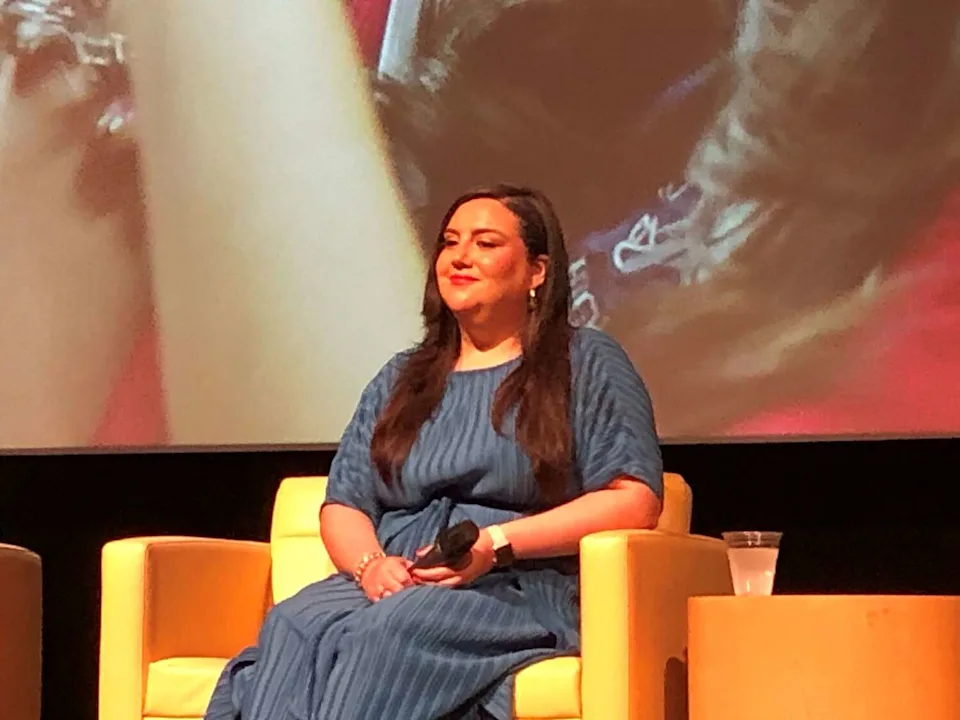
Chief Program Officer, Alamo Promise, Alamo Colleges District
Stephanie Vasquez is the Chief Program Officer for the Alamo Promise program at the Alamo Colleges District, where she has been instrumental in shaping and expanding one of the region’s most inclusive tuition-free college initiatives. Over her 16-year career with Alamo Colleges, Vasquez has overseen the enrollment of over 30,000 Promise Scholars and helped design crucial wraparound support services, such as academic advising and advocacy centers. Known for her commitment to increasing educational access and completion rates in Bexar County, she plays a central role in local partnerships and strategies aimed at combating generational poverty through higher education. Vasquez’s leadership continues to drive innovative solutions for student success throughout San Antonio.


